
International SEO for Shopify: hreflang and Multi-Region Targeting
On this page
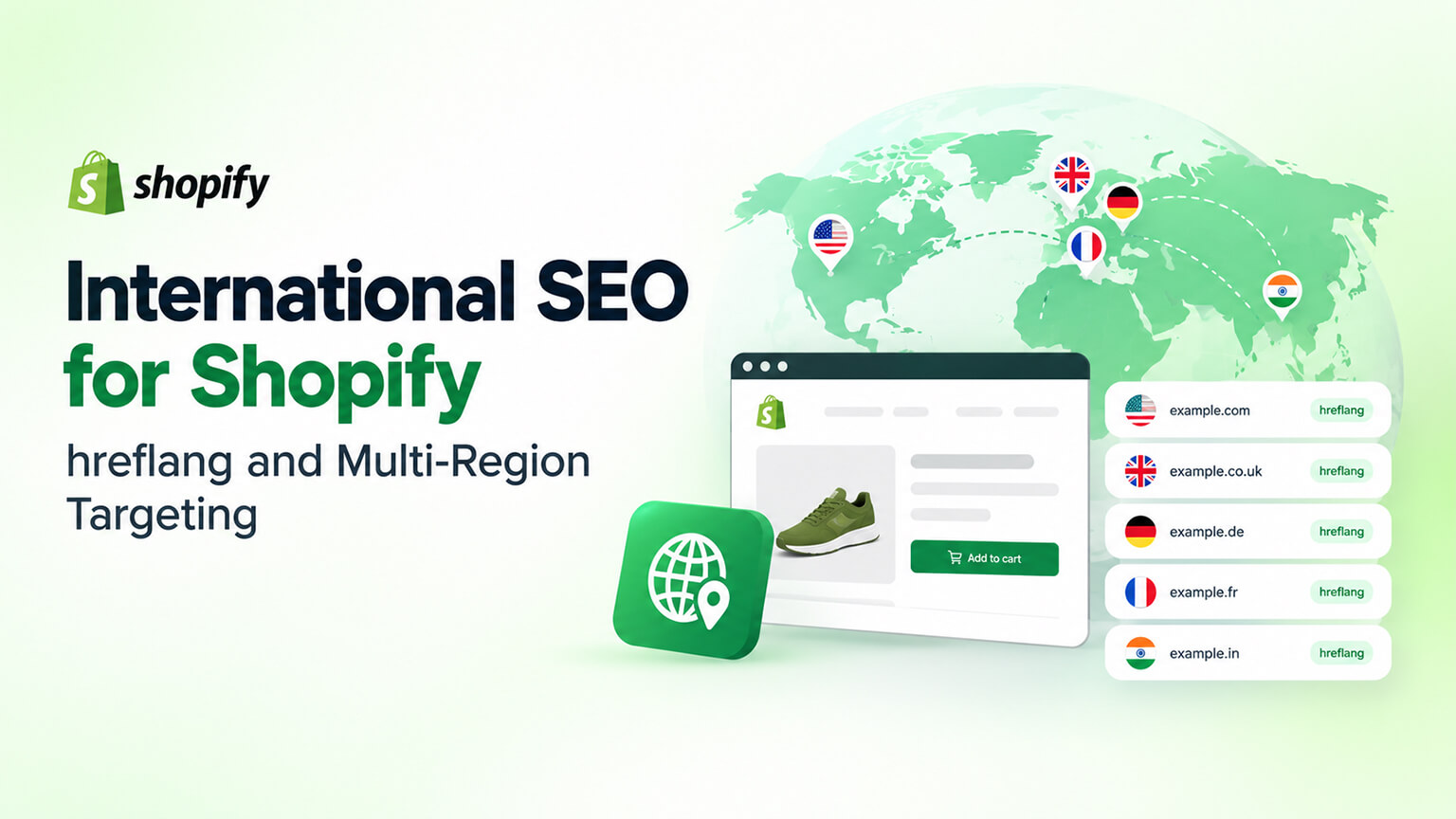
Selling internationally (as the Markets and going-international discussions cover) brings a specific SEO challenge: international SEO — ensuring the right version of your content ranks for the right audience in the right region and language, without the duplicate-content and targeting problems that international/multi-language setups can create. When you have multiple versions of pages (for different countries, regions, or languages — via Shopify Markets, multiple domains, or translated content), search engines need to understand which version to show which users, and you need to avoid these versions competing with or duplicating each other. The key technical tool for this is hreflang (annotations telling search engines the language/region each version targets), alongside proper URL/domain structure and other international-SEO practices. Getting international SEO right ensures your international expansion (as the Markets discussion covers) actually reaches the right audiences in search (versus international-SEO problems undermining it). This piece covers international SEO for Shopify: the international-SEO challenge, hreflang, multi-region targeting and structure, and how to do it right. (This connects to the Markets and going-international discussions, which cover international selling broadly; this focuses on international SEO. Note: international SEO is technical; this covers the concepts and Shopify context.)
This piece covers the international-SEO challenge, hreflang (what it is and how it helps), multi-region targeting and URL structure, and how to do international SEO right on Shopify. Because international selling requires international SEO to reach the right audiences, and getting it right (hreflang, structure) matters. Let me walk through it.
The international-SEO challenge
Let’s understand the specific SEO challenge international selling creates. Multiple versions of content — selling internationally often means multiple versions of your pages: different languages (translated content), different regions/countries (region-specific content, pricing, currency, via Markets or domains, as those discussions cover) — so you have multiple versions of pages targeting different audiences. Search engines must show the right version — search engines need to understand which version to show which users (the right language/region version for each user’s language and location), so international users get the appropriate version (versus the wrong-language or wrong-region version) — the core need (right version to right user). Risk of duplicate content — multiple versions of similar content (e.g., the same page in different regions, or similar language versions) risk duplicate-content issues (search engines seeing them as duplicates, as the duplicate-content discussion covers), which can cause problems (the wrong version ranking, versions competing, diluted signals) — a key international-SEO risk. Risk of versions competing — without proper international-SEO signals, the different versions can compete with each other in search (rather than each targeting its region/language), undermining their targeting — a targeting problem. Wrong version ranking — without proper signals, the wrong version might rank for a user (e.g., a US user getting the UK version, or the wrong-language version), harming the experience and relevance — a targeting failure. The challenge: correct targeting without duplication — so the international-SEO challenge is ensuring correct targeting (the right version ranking for the right region/language audience) without duplicate-content or competition problems (the versions properly differentiated and targeted, not duplicating or competing) — the core challenge. And it needs proper technical setup — meeting this challenge requires proper international-SEO technical setup (hreflang, URL/domain structure, as covered next), so the versions are correctly targeted and differentiated for search engines — so international SEO needs deliberate technical setup. So the international-SEO challenge is that multiple versions of content (for different languages/regions) need to be correctly targeted (the right version to the right audience) without duplicate-content or competition problems — requiring proper technical setup (hreflang, structure) so search engines show the right version to the right users and the versions don’t duplicate or compete. So international SEO addresses correctly targeting multiple versions without duplication — which hreflang and structure enable. So understand the challenge (correct targeting without duplication), which the next sections cover addressing. So international selling creates the challenge of correctly targeting multiple content versions without duplication, needing proper setup.
hreflang: what it is and how it helps
hreflang is the key technical tool for international SEO, so understanding it is central. What hreflang is — hreflang is an annotation (in the HTML head, HTTP headers, or sitemap) that tells search engines the language and/or region each version of a page targets (e.g., this version is for English/US, this for English/UK, this for French/France), so search engines know each version’s target audience — the core function (annotating each version’s language/region target). How it helps — hreflang helps search engines show the right version to the right user (matching the user’s language and region to the appropriate version’s hreflang annotation), so international users get the appropriate version — solving the “right version to right user” need. Addresses duplicate content — hreflang helps address the duplicate-content risk: by telling search engines the versions are alternates targeting different languages/regions (not duplicates), it clarifies their relationship (alternate versions, not duplicate content), reducing duplicate-content problems and helping each version target its audience — so hreflang differentiates the versions (as language/region alternates) for search engines. Connects the versions — hreflang connects the alternate versions (each version’s hreflang references the others, forming a set of alternates), so search engines understand the full set of language/region versions and their targets — connecting the version set. Requires correct implementation — hreflang must be implemented correctly (accurate annotations, all versions referencing each other, correct language/region codes, no errors), since errors undermine it (incorrect or incomplete hreflang doesn’t work or causes issues) — so correct hreflang implementation is essential (and it’s technical/error-prone). Shopify and hreflang — Shopify (with Markets, as that discussion covers) handles hreflang for international setups to a degree (Markets can generate hreflang for its market versions), so Shopify’s international features help with hreflang (though verify it’s correct for your setup, and custom/complex setups may need attention) — so leverage Shopify’s hreflang support (while ensuring it’s correct). And it’s key for international SEO — hreflang is the key tool for international SEO (telling search engines each version’s target, enabling correct targeting and reducing duplication), so getting it right is central to international SEO — the central technical element. So hreflang is an annotation telling search engines the language/region each page version targets, helping them show the right version to the right user and addressing duplicate content (by differentiating the versions as alternates), connecting the version set — requiring correct implementation, with Shopify (via Markets) helping generate it (verify it’s correct) — the key technical tool for international SEO. So implement hreflang correctly (leveraging Shopify’s support, verifying it) as the central international-SEO tool. The next section covers multi-region targeting and structure.
Multi-region targeting and URL structure
Beyond hreflang, multi-region targeting involves your URL/domain structure and other signals. URL/domain structure options — international setups use different URL/domain structures: separate country domains (e.g., .co.uk, .de — ccTLDs), subdomains (uk.example.com), subfolders (example.com/uk/), or Shopify Markets’ structure (as the Markets discussion covers) — each with international-SEO implications (how they signal region targeting). Structure signals region — the URL/domain structure signals region targeting to search engines (e.g., a .co.uk domain signals UK targeting; a /uk/ subfolder signals UK content), so the structure helps target regions — choose a structure that clearly signals your region targeting (and is manageable). Shopify Markets’ approach — Shopify Markets (as that discussion covers) handles the international structure (domains/subfolders per market, with hreflang), providing an international structure for its markets — so Markets gives you an international-SEO structure (verify it’s set up well for your targeting). Consistent, correct structure — ensure the structure is consistent and correct (clear region/language targeting, correct hreflang matching the structure, no misconfiguration), so the targeting works — a correct, consistent international structure. Geotargeting signals — beyond structure and hreflang, other signals help region targeting: Search Console’s international targeting settings (where applicable), region-relevant content and signals, local relevance (as the local-SEO discussion touches on for physical presence) — additional geotargeting signals. Avoid duplicate-content problems — ensure the structure and hreflang together avoid duplicate-content problems (the versions differentiated and targeted, canonicals handled correctly, as the canonical discussion covers) — so the versions don’t duplicate/compete (structure + hreflang + canonicals working together). Language vs. region targeting — handle language and region targeting appropriately (targeting by language, region, or both — e.g., English for the US vs. UK, or French vs. English), with hreflang annotating the language/region correctly — precise language/region targeting. And it’s technical — international structure and targeting are technical (URL/domain structure, hreflang, canonicals, geotargeting), often benefiting from SEO/developer expertise (getting the structure and signals right, as the team discussion covers) — so consider expertise for it. So multi-region targeting involves the URL/domain structure (ccTLDs, subdomains, subfolders, or Markets’ structure — signaling region targeting), Shopify Markets’ international structure, a consistent correct structure, geotargeting signals (Search Console, region relevance), avoiding duplicate-content problems (structure + hreflang + canonicals), appropriate language/region targeting, and the technical nature (benefiting from expertise). So set up the URL/domain structure and targeting signals correctly (leveraging Markets, with expertise), alongside hreflang, for correct multi-region targeting. The next section covers doing international SEO right overall. So multi-region targeting uses URL/domain structure and geotargeting signals (with hreflang) to target regions correctly without duplication.
How to do international SEO right on Shopify
Doing international SEO right on Shopify involves leveraging Markets and the technical setup correctly. Leverage Shopify Markets — leverage Shopify Markets (as that discussion covers) for international selling, which handles much of the international setup (currency, language, structure, hreflang for its markets), providing an international foundation — so Markets is the starting point for international on Shopify (handling much of the structure and hreflang). Ensure hreflang is correct — ensure hreflang is implemented correctly (via Markets, and verified — accurate annotations, all versions connected, correct codes, no errors), since correct hreflang is central (and errors undermine it) — verify your hreflang. Get the structure right — ensure the URL/domain structure (via Markets or your setup) correctly signals region/language targeting and is consistent, so the structure supports the targeting — correct international structure. Handle duplicate content and canonicals — ensure duplicate content is handled (the versions differentiated via hreflang, canonicals correct, as the canonical and duplicate-content discussions cover), so the versions don’t duplicate/compete — proper canonicalisation alongside hreflang. Localise content properly — localise the content properly (genuine translation, region-relevant content, as the Markets and translation discussions cover), since good localisation supports international SEO and conversion (versus poor/machine translation) — quality localisation (which also serves SEO). Use Search Console for international — use Search Console (international targeting settings where applicable, monitoring international performance, as the measuring-SEO discussion covers), monitoring and supporting your international SEO — Search Console for international. Verify and test — verify and test the international SEO (hreflang correct via testing tools, the right versions targeting the right regions, no duplicate-content or targeting issues), since international SEO is error-prone and needs verification — testing/verifying the setup. Get SEO/developer expertise — given international SEO’s technical, error-prone nature (hreflang, structure, canonicals, targeting), get SEO/developer expertise (ensuring it’s set up correctly, as the team discussion covers) — expertise for correct international SEO. And monitor international performance — monitor your international SEO performance (rankings, traffic by region, as the measuring-SEO discussion covers), catching issues and confirming the targeting works — ongoing monitoring. So do international SEO right on Shopify by leveraging Shopify Markets (the international foundation, handling much of the structure and hreflang), ensuring hreflang is correct (verified), getting the URL/structure right (signaling targeting), handling duplicate content and canonicals, localising content properly (quality translation), using Search Console for international, verifying and testing (given the error-prone nature), getting SEO/developer expertise, and monitoring international performance. The keys are leveraging Markets, ensuring correct hreflang and structure (the central technical elements), handling duplicate content, and getting expertise given the technical, error-prone nature. So do international SEO right by leveraging Markets and ensuring correct hreflang, structure, and canonicalisation (with expertise and verification) — so your international versions correctly target their audiences without duplication. So international SEO on Shopify is done right by leveraging Markets and getting the technical setup (hreflang, structure, canonicals) correct, with expertise.
The bottom line
Selling internationally brings a specific SEO challenge: international SEO — ensuring the right version of your content ranks for the right audience in the right region and language, without the duplicate-content and targeting problems that international and multi-language setups can create. When you have multiple versions of pages (for different countries, regions, or languages, via Shopify Markets, multiple domains, or translated content), search engines need to understand which version to show which users, and you need to avoid the versions competing with or duplicating each other — so the challenge is correct targeting (the right version to the right audience) without duplication or competition, which requires proper technical setup. The key technical tool is hreflang — an annotation telling search engines the language and/or region each page version targets, which helps them show the right version to the right user and addresses the duplicate-content risk by differentiating the versions as language/region alternates (not duplicates) and connecting the version set. hreflang must be implemented correctly (accurate annotations, all versions connected, correct codes, no errors), and Shopify (via Markets) helps generate it — though you should verify it’s correct. Beyond hreflang, multi-region targeting involves your URL/domain structure (separate country domains, subdomains, subfolders, or Shopify Markets’ structure — each signaling region targeting), which should clearly and consistently signal your targeting; plus geotargeting signals (Search Console’s international settings, region-relevant content) and proper canonicalisation (so the versions, together with hreflang, don’t duplicate or compete). Do international SEO right on Shopify by leveraging Shopify Markets (the international foundation, handling much of the structure and hreflang), ensuring hreflang is correct (verified via testing tools), getting the URL/structure right (clearly signaling region/language targeting), handling duplicate content and canonicals (so versions don’t compete), localising content properly (genuine, quality translation, which serves both SEO and conversion), using Search Console for international targeting and monitoring, verifying and testing the setup (since international SEO is technical and error-prone), getting SEO or developer expertise (given the technical, error-prone nature), and monitoring your international performance (rankings and traffic by region). The keys are leveraging Markets, ensuring correct hreflang and URL structure (the central technical elements), handling duplicate content and canonicalisation, and getting expertise. Done right, international SEO ensures your international expansion actually reaches the right audiences in search — the right language and region versions ranking for the right users, without duplicate-content or competition problems undermining it. So if you’re selling internationally, treat international SEO as an essential, technical part of the expansion: leverage Shopify Markets, get hreflang and your URL structure correct (with expertise and verification), handle duplicate content, and localise properly — so your international content is correctly targeted and your expansion succeeds in international search, rather than being undermined by the international-SEO problems that improper setup causes.
Frequently asked questions
What is international SEO and why does it matter for Shopify?
International SEO is the practice of ensuring the right version of your content ranks for the right audience in the right region and language, without the duplicate-content and targeting problems that international and multi-language setups create. It matters when you sell internationally and have multiple versions of your pages — for different countries, regions, or languages (via Shopify Markets, multiple domains, or translated content) — because search engines need to understand which version to show which users, and you need to avoid those versions competing with or duplicating each other. Without proper international SEO, the wrong version might rank for a user (a US shopper getting the UK version, or the wrong language), the versions can compete and dilute each other, and duplicate-content problems can arise — all undermining your international expansion. So international SEO ensures your international content is correctly targeted (the right version to the right audience) without duplication, which is essential for your international selling to actually reach and rank for the right audiences in search.
What is hreflang and how does it help?
hreflang is an annotation (placed in the HTML head, HTTP headers, or your sitemap) that tells search engines the language and/or region each version of a page targets — for example, this version is for English/US, this for English/UK, this for French/France. It helps in two key ways. First, it lets search engines show the right version to the right user, matching a user’s language and region to the appropriate version, so international users get the version meant for them. Second, it addresses the duplicate-content risk: by telling search engines that the versions are alternates targeting different languages and regions (not duplicates of each other), it clarifies their relationship and reduces duplicate-content problems, helping each version target its own audience. hreflang connects the set of alternate versions (each references the others), and it must be implemented correctly — accurate annotations, all versions connected, correct language and region codes, no errors — since mistakes undermine it. On Shopify, Markets helps generate hreflang for its market versions, but you should verify it’s correct for your setup.
How does URL structure affect international SEO?
Your URL and domain structure signals region targeting to search engines, so it’s an important part of international SEO alongside hreflang. Common structures include separate country domains (like .co.uk or .de, which strongly signal targeting a specific country), subdomains (like uk.example.com), subfolders (like example.com/uk/), or Shopify Markets’ structure. Each signals region targeting differently — a .co.uk domain signals UK targeting, a /uk/ subfolder signals UK content — so you want a structure that clearly and consistently signals your region and language targeting and is manageable for you. Shopify Markets handles the international structure for its markets (domains or subfolders per market, with hreflang), giving you an international-SEO structure to build on (verify it’s set up well for your targeting). The structure needs to work together with hreflang (which annotates each version’s target) and correct canonicalisation (so the versions don’t duplicate or compete), so that search engines correctly understand and target each version to its intended region and language audience.
How do I do international SEO right on Shopify?
Leverage Shopify Markets as your foundation (it handles much of the international setup — currency, language, structure, and hreflang for its markets), then ensure the technical elements are correct. Verify that hreflang is implemented correctly (accurate annotations, all versions connected, correct codes, no errors, tested with hreflang-checking tools), since it’s the central tool and errors undermine it. Ensure your URL and domain structure correctly and consistently signals region and language targeting. Handle duplicate content and canonicalisation so the versions don’t compete (hreflang differentiating them, canonicals correct). Localise your content properly (genuine, quality translation and region-relevant content, not just machine translation, since good localisation serves both SEO and conversion). Use Google Search Console for international targeting settings and to monitor your international performance (rankings and traffic by region). Verify and test the whole setup, since international SEO is technical and error-prone. And given that technical, error-prone nature, get SEO or developer expertise to ensure it’s set up correctly. The keys are leveraging Markets, getting hreflang and URL structure right, handling duplicate content, and using expertise and verification.