
Writing Product Descriptions That Rank and Convert
On this page
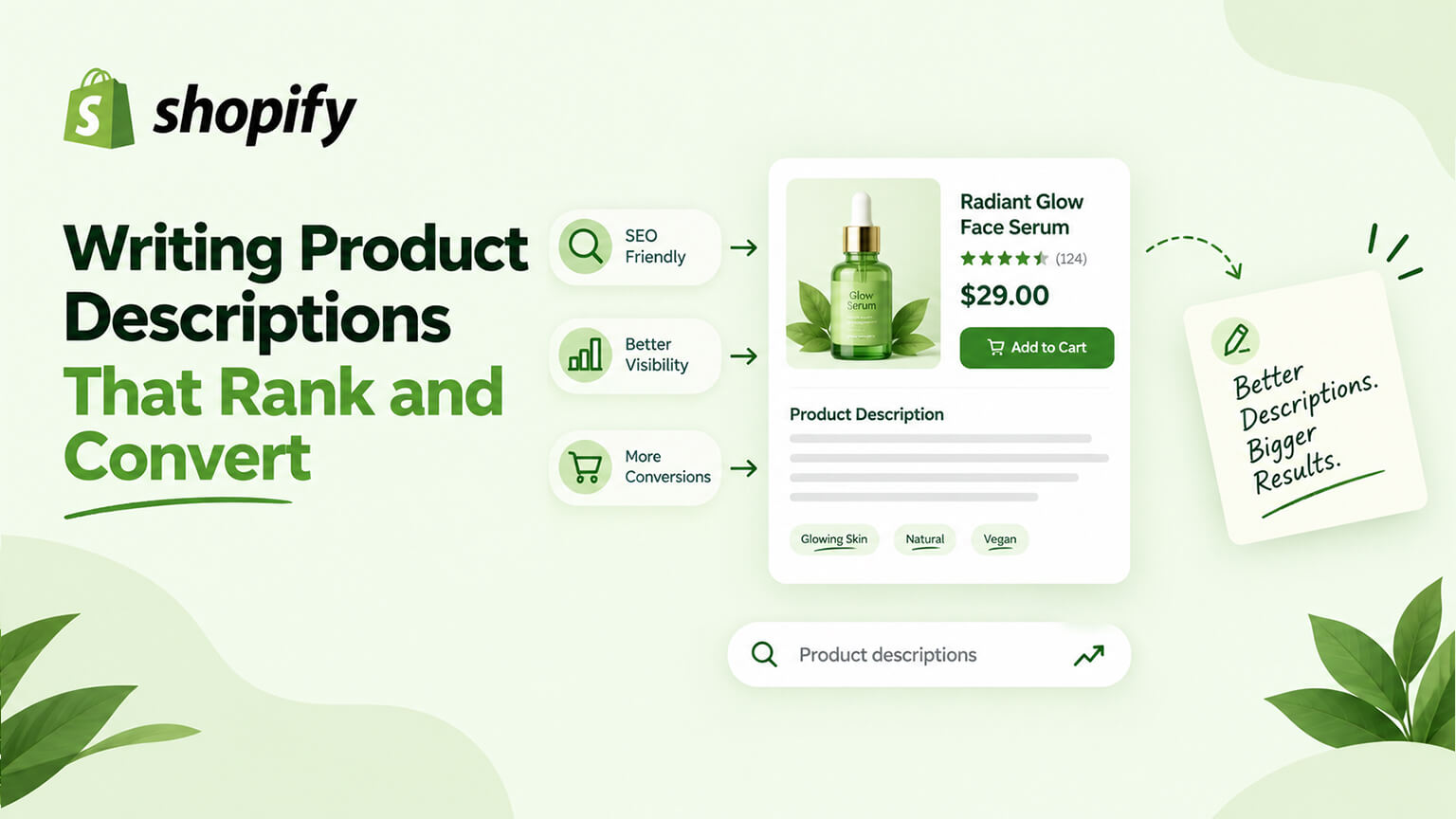
The product description is a small piece of text doing two big jobs: helping your product page rank in search (SEO — being found by people searching for products like yours) and persuading the shopper who lands on it to buy (conversion — turning a visitor into a customer). Many descriptions do neither well — thin manufacturer boilerplate that doesn’t rank (no unique, relevant content) and doesn’t convert (no persuasion, no answering the shopper’s questions). But a well-written product description does both: it’s found in search and it sells. Writing descriptions that rank and convert isn’t about keyword-stuffing (bad for both) or generic copy — it’s about creating useful, persuasive, well-optimised descriptions that serve both search engines and shoppers. Since product pages are where buying decisions happen (as the product-page discussion covers) and product-page SEO drives traffic (as that discussion covers), writing descriptions that rank and convert is high-value. This piece covers writing product descriptions that rank and convert: why they must do both, how to write for SEO (ranking), how to write for conversion (selling), and how to do both together. (This connects to the product-page-SEO and product-page discussions; this focuses on writing descriptions that rank and convert.)
This piece covers why descriptions must rank and convert, how to write for SEO (ranking), how to write for conversion (selling), and how to write descriptions that do both. Because descriptions serve both search and shoppers, and writing them to do both is high-value. Let me walk through it.
Why descriptions must rank and convert
Product descriptions must do both jobs — rank and convert — because they serve both search engines and shoppers. Descriptions serve search (ranking) — the product description is content on your product page that search engines read to understand and rank the page (for relevant searches), so a good description helps the page rank (be found by people searching for products like yours, as the product-page-SEO discussion covers) — the SEO job. Thin or boilerplate descriptions don’t rank well (no unique, relevant, substantial content), so the description must serve SEO. Descriptions serve shoppers (converting) — the product description is also content the shopper reads to decide whether to buy (informing and persuading them, answering their questions, as the product-page discussion covers), so a good description helps convert the shopper (turning a visitor into a buyer) — the conversion job. Descriptions that don’t persuade or inform (thin, generic) don’t convert well, so the description must serve conversion. Both matter and connect — both jobs matter (ranking brings traffic, converting turns it into sales), and they connect: a description that ranks brings shoppers, and a description that converts turns them into buyers — so a description doing both drives both traffic and sales (versus one that does neither, wasting the product page). The same content can do both — importantly, the same well-written description can do both (a useful, persuasive, well-optimised description serves both search engines and shoppers), so you don’t trade off ranking vs. converting — you write descriptions that do both. And most descriptions do neither well — the reality is many descriptions (thin, boilerplate, manufacturer copy, or keyword-stuffed) do neither well, wasting the product page’s potential — so writing descriptions that do both is a real opportunity. So descriptions must rank and convert because they serve both search engines (ranking, bringing traffic) and shoppers (converting, making sales), both matter and connect (traffic and sales), the same good description can do both (no trade-off), and most descriptions do neither well (an opportunity). So write descriptions to do both — ranking and converting — capturing the full value of the product page. The next sections cover writing for each and both.
How to write for SEO (ranking)
Writing product descriptions for SEO (ranking) involves several practices (as the product-page-SEO discussion covers). Unique, substantial content — write unique, substantial descriptions (not thin manufacturer boilerplate duplicated across sites, which doesn’t rank — as the duplicate-content discussion covers), giving search engines unique, substantial content to rank — the foundation of ranking descriptions. Use relevant keywords naturally — include the relevant keywords (the terms people search for the product — the product name, type, key attributes, as the keyword-research discussion covers) naturally in the description, so the page is relevant for those searches — without keyword-stuffing (which is bad for ranking and reading). Natural, relevant keyword use signals relevance. Answer what searchers want — write content that answers what searchers/shoppers want to know (the product’s features, benefits, uses, details), since content matching search intent ranks (and converts) — relevance to intent. Good structure and readability — structure the description well (clear, readable, scannable — headings, paragraphs, bullets where appropriate, as the product-page discussion covers), which helps both SEO (structure, readability) and shoppers (scanning) — good structure serves both. Sufficient depth — provide sufficient depth (substantial, informative content covering the product), since thin content ranks poorly (and informs poorly), while substantial, useful content ranks (and converts) — depth matters for both. Include relevant details and terms — include relevant product details and terms (specifications, attributes, use cases, related terms), covering the topic comprehensively (helping relevance and informing shoppers) — comprehensive relevant content. And avoid duplicate/boilerplate — avoid duplicate or boilerplate descriptions (manufacturer copy used by many sites, as the duplicate-content discussion covers), which don’t rank (and don’t differentiate) — write original descriptions. So write for SEO (ranking) with unique substantial content, natural relevant keyword use (no stuffing), content answering search intent, good structure and readability, sufficient depth, relevant details and terms, and avoiding duplicate/boilerplate. These make the description rank (found in search) — and notably, they also serve shoppers (unique, useful, well-structured, comprehensive content informs shoppers too) — so SEO writing overlaps with conversion writing. So write descriptions with these SEO practices, which also serve shoppers. The next section covers writing for conversion.
How to write for conversion (selling)
Writing product descriptions for conversion (selling) involves persuasion and informing (as the product-page discussion covers). Focus on benefits, not just features — describe the benefits (what the product does for the shopper, why it’s valuable) not just the features (the specs) — benefits persuade (connecting the product to the shopper’s needs/desires), while features alone inform less persuasively — so translate features into benefits. Answer the shopper’s questions — answer the questions and concerns shoppers have (what is it, what does it do, why is it good, will it work for me, addressing objections, as the product-page and returns discussions cover), so the description informs and reassures (helping them decide to buy) — addressing what shoppers need to know. Persuade and sell — write persuasively (compelling, appealing copy that makes the product desirable and the case for buying), since the description should sell (not just describe) — persuasive, benefit-focused, appealing copy. Speak to the audience — write for your specific audience (their needs, language, desires, as the audience/brand discussions cover), so the description resonates (relevant, appealing to them) — audience-relevant persuasion. Use your brand voice — write in your brand voice (as the brand discussions cover), so the description is on-brand and distinctive (versus generic) — brand-consistent, differentiated copy. Be clear and scannable — write clearly and scannably (shoppers scan — clear, scannable copy with key points accessible, as the product-page discussion covers), so shoppers get the key selling points easily — clear, scannable persuasion. Include what drives the decision — include the information and persuasion that drives the buying decision (benefits, key details, reassurance, differentiation, as the product-page discussion covers), so the description moves shoppers toward buying — decision-driving content. And build desire and confidence — build desire (making the product appealing) and confidence (reassuring the shopper it’s a good choice), so shoppers want it and feel confident buying — the emotional and rational persuasion. So write for conversion (selling) with benefit-focus (not just features), answering the shopper’s questions, persuasion (selling, not just describing), audience-relevance, brand voice, clarity and scannability, decision-driving content, and building desire and confidence. These make the description convert (persuade shoppers to buy) — and notably, benefit-focused, useful, comprehensive, well-written content also serves SEO (substantial, relevant, useful content ranks) — so conversion writing overlaps with SEO writing. So write descriptions with these conversion practices, which also serve SEO. The next section covers doing both together.
How to write descriptions that do both
The key insight is that ranking and converting aren’t a trade-off — a well-written description does both, because good content serves both search engines and shoppers. Good content serves both — the same qualities make a description rank and convert: unique, substantial, useful, well-structured, comprehensive, relevant content (ranks and informs), benefit-focused persuasive writing (converts and provides substantial relevant content), answering what searchers/shoppers want (relevant to intent — ranks and converts) — so writing a good description serves both. No keyword-stuffing (bad for both) — don’t keyword-stuff (bad for ranking — search engines penalise it — and bad for converting — it reads badly), which harms both; write naturally with relevant keywords (good for both) — avoiding the trade-off-creating mistake. Write for shoppers first, optimise for search — write primarily for shoppers (useful, persuasive, benefit-focused, answering their questions) and optimise for search (relevant keywords naturally, unique substantial content, good structure), so the description serves shoppers (converting) while being search-optimised (ranking) — the shopper-first, search-optimised approach that does both. Comprehensive, useful, persuasive — write comprehensive (covering the product, ranking and informing), useful (answering questions, ranking and converting), persuasive (benefit-focused, converting and providing substantial content) descriptions — the combination that does both. Unique and original — write unique, original descriptions (ranking — not duplicate/boilerplate — and differentiating — converting via distinctiveness), serving both. Structure for both — structure descriptions for both (readable, scannable, well-organised — SEO and shopper-friendly), serving both. And review for both — review descriptions against both goals (does it rank — unique, relevant, substantial, optimised? does it convert — persuasive, benefit-focused, answering questions, on-brand?), ensuring it does both. So write descriptions that do both by recognising good content serves both (the key insight), not keyword-stuffing (bad for both), writing for shoppers first and optimising for search, writing comprehensive/useful/persuasive/unique descriptions, structuring for both, and reviewing against both goals. The key is that a good, useful, persuasive, well-optimised description ranks and converts — there’s no trade-off; writing well for shoppers (while optimising for search) does both. So write descriptions that serve both search engines and shoppers — useful, persuasive, unique, well-optimised content — capturing both the ranking (traffic) and converting (sales) value of the product page. So the answer to writing descriptions that rank and convert is to write good descriptions (useful, persuasive, unique, comprehensive, well-structured, naturally-optimised) that serve both search engines and shoppers — since good content does both.
A worked example: rewriting a weak description
Picture a product page for a cast-iron skillet with the typical weak description: a couple of lines of manufacturer boilerplate — “Durable cast-iron skillet. 10-inch. Pre-seasoned. Suitable for all hobs.” It’s thin, it’s identical to the copy on a dozen other sites selling the same skillet, and it neither ranks (no unique substantial content, duplicated everywhere) nor converts (no persuasion, no answers to what a shopper actually wonders). Rewriting it to rank and convert doesn’t mean stuffing keywords or padding — it means writing good content that serves both.
The rewrite opens with benefits, not just specs: it explains that the skillet’s heavy cast-iron construction gives even, retained heat for a better sear, that it’s pre-seasoned so it’s ready to use and builds a naturally non-stick surface over time, and that it moves from hob to oven to table. It answers the real questions shoppers have — does it work on induction (yes), how do you care for it (a line on seasoning and hand-washing), what can you cook in it (from steaks to cornbread) — addressing the objections that otherwise cause hesitation or returns. It’s written in the brand’s warm, knowledgeable voice, and it naturally includes the terms people search (“cast-iron skillet,” “pre-seasoned,” “induction-compatible,” “10-inch”) without stuffing, because those words belong in an honest, useful description anyway. It’s structured to be scannable (a short intro, a few clear points, care info) so shoppers grab what they need and search engines can parse it. The result does both jobs at once: it’s unique, substantial, and relevant enough to rank, and benefit-focused, reassuring, and persuasive enough to convert. Same product, same page — but a description that now earns traffic and turns that traffic into sales, rather than one that wasted the page on boilerplate. That’s the whole lesson: write primarily for the shopper (useful, persuasive, honest, answering their questions), optimise naturally for search (unique, relevant, well-structured), and a single good description does the double duty that thin or stuffed copy never can.
The bottom line
The product description does two big jobs: helping your product page rank in search (SEO — being found by people searching for products like yours) and persuading the shopper who lands on it to buy (conversion). Many descriptions do neither well — thin manufacturer boilerplate that doesn’t rank (no unique, relevant content) and doesn’t convert (no persuasion) — but a well-written description does both, and there’s no trade-off between them. Descriptions must rank and convert because they serve both search engines (ranking, bringing traffic) and shoppers (converting, making sales), both matter and connect (ranking brings shoppers, converting turns them into buyers), and the same well-written description can do both. Write for SEO (ranking) with unique, substantial content (not thin boilerplate, which doesn’t rank), natural relevant keyword use (no keyword-stuffing), content answering search intent, good structure and readability, sufficient depth, relevant details and terms, and avoiding duplicate/boilerplate — and notably these also serve shoppers (unique, useful, well-structured, comprehensive content informs too). Write for conversion (selling) with benefit-focus (not just features — translate features into benefits), answering the shopper’s questions and concerns, persuasion (selling, not just describing), audience-relevance, your brand voice, clarity and scannability, decision-driving content, and building desire and confidence — and notably these also serve SEO (benefit-focused, useful, comprehensive, well-written content ranks). The key insight is that ranking and converting aren’t a trade-off — a good description does both, because the same qualities (unique, substantial, useful, well-structured, comprehensive, relevant, benefit-focused, persuasive content answering what searchers and shoppers want) make a description rank and convert. So write descriptions that do both by recognising good content serves both, not keyword-stuffing (which is bad for both ranking and reading), writing primarily for shoppers (useful, persuasive, benefit-focused, answering their questions) while optimising for search (relevant keywords naturally, unique substantial content, good structure), writing comprehensive, useful, persuasive, unique descriptions, structuring for both, and reviewing against both goals. The answer to writing product descriptions that rank and convert is to write good descriptions — useful, persuasive, unique, comprehensive, well-structured, naturally-optimised — that serve both search engines and shoppers, since good content does both without trade-off. Done this way, your product descriptions capture the full value of your product pages — being found in search (traffic) and selling to the shoppers who arrive (sales) — which, since product pages are where buying decisions happen and product-page SEO drives traffic, is a high-value thing to get right.
Frequently asked questions
Can a product description both rank in search and convert shoppers?
Yes — and importantly, there’s no trade-off between the two. A well-written product description does both, because the same qualities that help it rank also help it convert. Unique, substantial, useful, well-structured, comprehensive, relevant content ranks in search (giving search engines something to rank) and informs shoppers (helping them decide). Benefit-focused, persuasive writing converts shoppers (making the case for buying) while also providing the substantial, relevant content that ranks. Content that answers what searchers and shoppers want to know serves both search intent (ranking) and the shopper’s decision (converting). So rather than choosing between ranking and converting, you write a good description that does both. The mistake that creates a false trade-off is keyword-stuffing — which is bad for ranking (search engines penalise it) and bad for converting (it reads badly) — so avoid that, and write naturally good content that serves both search engines and shoppers.
How do I write a product description for SEO?
Write unique, substantial content rather than thin manufacturer boilerplate (which is duplicated across many sites and doesn’t rank). Include the relevant keywords — the terms people actually search for the product (its name, type, key attributes) — naturally in the description, without keyword-stuffing. Write content that answers what searchers and shoppers want to know (the product’s features, benefits, uses, and details), matching search intent. Structure the description well (clear, readable, scannable), provide sufficient depth (substantial, informative content, since thin content ranks poorly), include relevant product details and terms (covering the product comprehensively), and avoid duplicate or boilerplate descriptions. Notably, all of these SEO practices also serve shoppers — unique, useful, well-structured, comprehensive content informs and helps convert them too — so writing for SEO overlaps heavily with writing for conversion. The goal is useful, relevant, substantial content that search engines can rank and shoppers find helpful, not keyword-stuffed or thin copy.
How do I write a product description that sells?
Focus on benefits, not just features — translate the product’s features (its specs) into benefits (what it does for the shopper, why it’s valuable), since benefits persuade by connecting the product to the shopper’s needs. Answer the questions and concerns shoppers have (what it is, what it does, why it’s good, whether it will work for them, addressing objections), so the description informs and reassures. Write persuasively and appealingly (the description should sell, not just describe), speak to your specific audience (their needs, language, and desires), and use your brand voice so it’s on-brand and distinctive. Write clearly and scannably (shoppers scan, so make the key selling points easy to grab), include the information and persuasion that drives the buying decision, and build both desire (making the product appealing) and confidence (reassuring the shopper it’s a good choice). And notably, this benefit-focused, useful, well-written content also serves SEO (it’s substantial, relevant, and useful) — so writing to convert overlaps with writing to rank.
What’s the biggest mistake in product descriptions?
Two related mistakes stand out. The first is thin, generic, or boilerplate descriptions — often manufacturer copy used by many sites — which do neither job well: they don’t rank (no unique, substantial, relevant content) and don’t convert (no persuasion, no answering the shopper’s questions), wasting the product page’s potential. The second is keyword-stuffing — cramming in keywords unnaturally in an attempt to rank — which backfires on both fronts: search engines penalise it (so it hurts ranking), and it reads badly (so it hurts converting). Both mistakes stem from not writing good content. The fix for both is the same: write unique, useful, persuasive, benefit-focused, comprehensive descriptions in your brand voice that answer what shoppers and searchers want to know, with relevant keywords used naturally. good content — written primarily for shoppers and optimised sensibly for search — ranks and converts, while thin, boilerplate, or keyword-stuffed copy does neither.