Shopify App Development in USA: Custom Apps for Growing eCommerce Brands
June 12, 2026

Let’s be honest — most Shopify store owners pour money into ads, tweak their homepage design three times, maybe even hire a social media person, and still wonder why organic traffic barely moves. The answer isn’t always more budget. Sometimes it’s that nobody has actually looked at how Google sees your store. That’s the job of a Shopify SEO consultant. Not to run campaigns. Not to manage your Instagram. To dig into the technical and content gaps that are quietly costing you rankings every single day.
Short version: they find what’s stopping your store from ranking and fix it.
That means a full audit of your site—crawl issues, duplicate URLs, missing schema, slow load times, thin collection pages, broken internal links—the whole picture. Then they build a strategy around it. On-page fixes, content that actually matches what buyers are searching for, and authority building that gives Google a reason to trust your store over a competitor’s.
It’s not glamorous work. But it’s the kind of work that compounds quietly, and then suddenly your organic revenue doubles.
Here’s something most people don’t realize. Shopify generates two URLs for every product — one under /products/ and one under /collections/product-name/. That alone creates a duplicate content problem that confuses crawlers and splits your ranking signals. A generalist SEO won’t even know to look for it.
Shopify also uses Liquid templating, has specific limitations around robots.txt editing, and handles sitemaps automatically in ways that can actually work against you if not configured correctly. None of this is obvious. You learn it by working inside Shopify stores, not by reading a general SEO blog.
Depending on where your store stands, services typically include the following:
Paid ads are a snap. You turn them off, and the water stops. SEO is more like digging a well — slower to build, but once it’s there, it keeps producing.
A good consultant brings clarity too. You stop guessing which pages need work. You stop publishing random blog posts hoping something sticks. There’s a plan based on actual data—what keywords buyers use, where your competitors are beatable, and what Google needs to see from your store before it’ll push you up.
The same issues come up again and again across stores:
Any one of these can suppress rankings. All of them together? That’s why some stores can’t crack page one no matter how much they spend on ads.
Keyword stuffing in titles—it used to work; it doesn’t anymore. Installing five different SEO apps that all edit the same metadata fields and end up overwriting each other. Building backlinks from sketchy link farms because they were cheap. Ignoring mobile experience because “most of our buyers are on desktop.” None of these are theoretical risks. They’re things real stores do and real stores suffer for.
First comes the audit. A proper one — not an automated report emailed to you with 200 vague warnings. An actual review of your crawl data, Search Console performance, competitor keyword gaps, content quality, and technical health.
From there, a prioritized roadmap. Technical foundations get fixed first because everything else is built on top of them. Then on-webpage upgrades, then content growth, then hyperlink construction. Monthly, you get clean reporting through Google Analytics 4 and Search Console—organic periods, ranking motion, CTR modifications, and revenue attribution.
Agencies have account managers, junior staff, and overhead costs baked into your invoice. Freelancers vary wildly—some are brilliant, some disappear after onboarding. A specialist consultant sits in between senior-level work, direct communication, and accountability that agencies rarely offer at that price point.
For stores doing $10k–$200k/month in revenue, a consultant is usually the right fit.
Honest pricing: monthly retainers typically fall between $500 and $3,000, depending on store complexity and competitive landscape. One-time audits usually start around $300–$500. The shops that hesitate on search engine optimization funding at the same time as spending $5k/month on ads are regularly the ones who ultimately recognize organic traffic could cost a fragment of that consistent with conversion.
Three to six months before you see meaningful movement. Six to twelve before the compounding effect kicks in properly. Anyone promising first-page rankings in thirty days is either targeting keywords nobody searches for or straight-up lying.
Competitive niches—supplements, fashion, consumer electronics—take longer. Niche stores with low competition can move faster. The timeline is always honest from the start.
Rankings count, but they’re now not the simplest aspect. The full image consists of organic traffic growth, improvements in click-through rate, percentage of branded vs. non-branded queries, and most importantly, revenue directly attributed to natural search in GA4. As AI search grows, citation appearances in Google AI Overviews and Perplexity become another measurable signal of content authority.
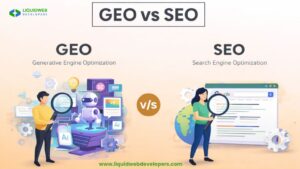
Search looks different than it did two years ago. Google’s AI Overviews now answer buyer questions directly in the results page. ChatGPT Search, Perplexity, and other LLM-powered tools pull from stores and content they trust. Getting cited in those answers isn’t luck—it’s the result of structured content, genuine topical authority, proper schema, and brand signals that tell AI systems your store is a reliable source.
Generative Engine Optimization (GEO) isn’t always a buzzword. For Shopify stores that want to stay seen as seek evolves, it is a real approach that needs to be constructed into the search engine marketing plan now, not in years.
Specific consequences rely upon the starting point and niche; however, sensible outcomes after 6–365 days of targeted work encompass tremendous organic site visitor growth, first-page rankings for high-purchase-purpose product and collection key phrases, decreased dependence on paid acquisition, and measurable natural revenue increases. Stores that commit to the procedure continuously see search engine marketing emerge as their maximum-ROI channel inside a year.
For most stores, yes. You get senior expertise directly — not handed off to a junior team member — and the pricing reflects actual value rather than agency overhead.
If you’re generating consistent revenue and have room to grow organically, yes. The earlier you build the foundation, the faster it compounds.
No. Shopify gives you a start line—a primary sitemap and editable meta fields. It would not optimize your content material, restore duplicate pages, construct authority, or create the strategic depth needed to outrank installed competitors.
If organic site visitors and sales from non-branded search queries are growing month over month, something is working. If they’re flat or declining, some thing wishes interest.
If your store is generating real revenue but Google traffic is not where it should be — that’s a fixable problem. It starts with understanding exactly what’s holding your store back, not guessing. A proper Shopify SEO audit gives you that clarity.
From there, the path to more organic traffic, better rankings, and sales that don’t depend entirely on ad spend becomes a lot clearer.