
How to Raise Average Order Value on Shopify Without Annoying People
On this page
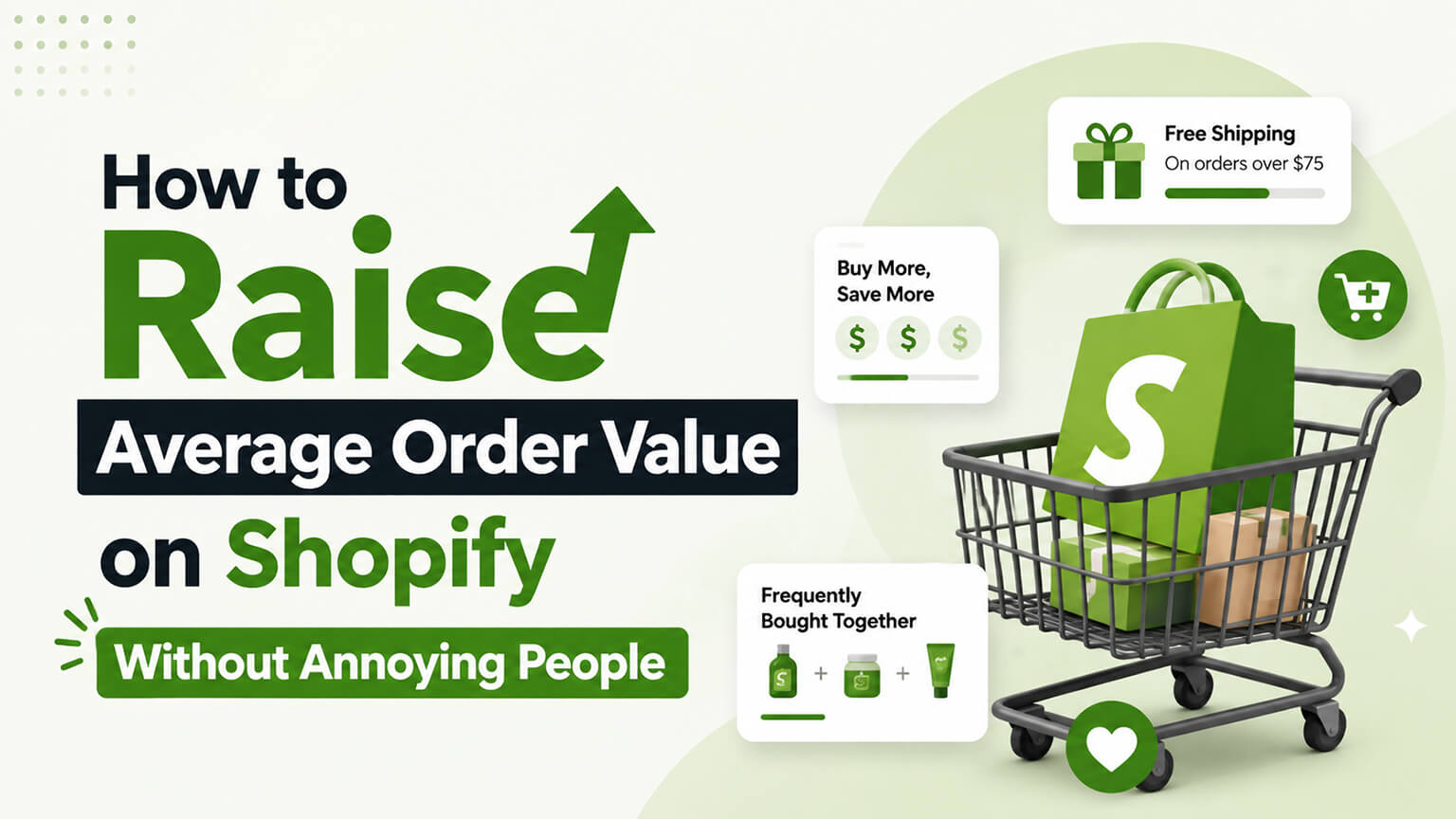
Average order value is the metric people reach for when traffic is expensive, and it deserves the attention. If you can get each customer to spend a bit more per order without spending more to acquire them, that money drops more or less straight to your bottom line. It’s one of the few growth levers that doesn’t require buying more attention.
The problem is that most “increase your AOV” advice boils down to “add upsells everywhere,” which, done badly, makes your store feel like a pushy salesperson who won’t let you leave. There’s a version of this that works and a version that makes customers feel manipulated, and the line between them is mostly about being helpful instead of greedy. Let me walk through the approaches that actually lift AOV without making people resent you.
Start with the mindset: help them spend more, don’t trick them
Here’s the reframe that fixes most of this. The goal isn’t to extract more money from people — it’s to help them buy more of what they’d actually be glad to have. Those sound similar but they produce completely different stores. The first leads to dark patterns, fake urgency, and pre-checked add-ons. The second leads to useful suggestions that happen to raise your AOV as a side effect.
Customers can smell the difference. A relevant recommendation — “people who bought this also got the matching X” — feels like help. An irrelevant upsell shoved in your face at every step feels like being worked over. So before any tactic, adopt the posture: every AOV play should be something a thoughtful salesperson in a good store would actually do. That filter alone kills most of the annoying stuff.
Bundles: the friendliest AOV lever there is
Bundling is my favorite AOV tactic because it’s almost always a win-win. You group related products together, usually at a slight saving versus buying separately, and the customer gets a convenient, complete solution while spending more than they would on one item.
The reason it works without feeling pushy is that it’s useful. Someone buying a skincare cleanser is plausibly interested in the matching moisturizer and serum — offering the routine as a bundle saves them the work of assembling it and rewards them for buying more. Coffee plus the right filters. A camera with the lens and the bag. The bundle answers a question the customer might already have (“what else do I need with this?”) and makes saying yes easy.
You can do curated bundles (you pick the combination) or build-your-own (the customer assembles from options, often with a discount for hitting a quantity). Both work. The key is that the bundle has to make sense — random products thrown together at a discount isn’t a bundle, it’s a clearance bin, and shoppers know the difference.
Free shipping thresholds: the gentle nudge
This one’s almost too reliable. Set a free-shipping threshold a bit above your current AOV, show shoppers how close they are, and watch a good chunk of them add something to qualify. “You’re $14 away from free shipping” is a remarkably effective little message, because it reframes spending more as saving money on shipping.
The psychology is interesting — people will happily add $14 of product to avoid a $7 shipping charge, which isn’t strictly rational but is very human. The progress bar in the cart makes it concrete and turns it into a tiny game. Just set the threshold thoughtfully: high enough to nudge people up, not so high it feels unreachable and they give up. A threshold sitting just above your average order is usually the sweet spot.
Upsells and cross-sells: placement and relevance are everything
Upselling (a better/bigger version) and cross-selling (complementary items) work — but only when they’re relevant and well-placed. The difference between effective and annoying is almost entirely about what you suggest and where.
Relevance: suggest things that go with what they’re buying or viewing. A relevant cross-sell converts and feels helpful; an irrelevant one is noise that trains people to ignore your suggestions entirely. Generic “you might also like” blocks full of random products are the weakest version. Thoughtful, specific pairings are the strong one.
Placement: the product page and cart are natural spots — “add the matching item,” “complete the set.” Post-purchase upsells (an offer right after checkout, before the thank-you page) are particularly nice because they don’t interfere with the original purchase decision at all; the customer’s already bought, so an easy one-click add-on is pure upside with no friction on the main conversion. What you want to avoid is upsells that interrupt or complicate the path to buying the thing they came for. Never let an AOV tactic threaten the core conversion.
Subscriptions and “subscribe and save”
If your product is consumable, offering a subscribe-and-save option raises both AOV and lifetime value at once. The customer commits to recurring orders in exchange for a small discount, which is solid for them (convenience, savings) and great for you (predictable, recurring revenue). I’ve covered subscriptions in depth elsewhere, but it belongs on any AOV list because it’s one of the most powerful levers when the product fits.
Tiered incentives and gifts
A step up from free shipping: tiered rewards. “Spend $75 for free shipping, $150 for a free gift.” This stacks nudges and gives bigger spenders something to reach for. Gift-with-purchase works well here — a free sample or small extra at a spending threshold can push order values up while also introducing customers to products they might buy next time. Like everything else, it works when the reward is appealing and the threshold is achievable; it flops when it feels stingy or out of reach.
What to avoid, plainly
The annoying versions of all this: pre-checked add-ons the customer has to notice and remove (sneaky, and increasingly frowned upon), fake urgency and countdown timers, upsell popups at every single step, irrelevant recommendations, and anything that makes the customer feel tricked rather than helped. These might bump a metric short-term, but they erode trust, and trust is what brings people back. An AOV gain that costs you repeat customers is a bad trade.
Measure it properly
One practical note: when you add AOV tactics, watch your overall numbers, not just AOV in isolation. The point is more total revenue and profit, not a prettier AOV figure. If an aggressive upsell raises AOV but drops your conversion rate (because it’s annoying people into leaving), that’s a loss disguised as a win. Look at revenue per visitor and the whole funnel, and keep the tactics that lift the total, not just the one metric.
The bottom line
Raising AOV on Shopify isn’t about squeezing customers — it’s about helping them buy more of what they’d actually want, through relevant bundles, a well-set free-shipping threshold, thoughtful cross-sells, subscriptions where they fit, and tiered rewards. Do it from a posture of helpfulness and it lifts revenue while making the shopping experience better. Do it greedily, with tricks and clutter, and you’ll bump a number while quietly training your customers to shop somewhere that respects them more. Help them spend more; don’t trap them into it.
Match the tactic to your product and your margins
The AOV levers aren’t one-size-fits-all — which ones work depends on what you sell and how your margins are structured, so it’s worth matching the tactic to your situation rather than bolting on all of them and hoping. Applying the wrong lever to the wrong store is how AOV tactics end up feeling forced and doing little.
Start with your product type. Consumable, replenishable products — coffee, supplements, skincare, pet food — are where subscriptions and subscribe-and-save shine, because the customer benefits from convenient recurring delivery and you gain predictable, recurring revenue. For these, subscriptions are often the single highest-impact AOV and lifetime-value move. Complementary-product categories — anything where items naturally pair, like skincare routines, camera gear, or apparel outfits — are where bundling and cross-sells work best, because the suggestions answer a real question the shopper already has (“what else do I need with this?”). One-off, standalone products with no natural companions get less from bundling and more from free-shipping thresholds and thoughtful upsells to a better version.
Then consider your margins, because they determine what you can afford to offer. Free-shipping thresholds, bundle discounts, subscribe-and-save savings, and gift-with-purchase all cost you something, and the math only works if the AOV lift outweighs the cost. A high-margin product can afford generous incentives that reliably push order values up; a thin-margin product needs more careful tactics, where the free-shipping threshold is set so the extra product covers the shipping cost, and discounts are modest enough not to erase the gain. Running an aggressive gift-with-purchase on a low-margin item can lift AOV while quietly destroying profit, which is exactly the kind of “win” that isn’t one.
Price point matters too. For low-price items, the lever is often getting people to buy more units or add companions to make the order worthwhile (bundles, thresholds, cross-sells). For considered, higher-price purchases, the lever is more often the upsell to a better version or the addition of accessories and protection, decided carefully so it helps rather than pressures. And your customer relationship matters: a first-time buyer responds differently than a loyal repeat customer, so the tactics that fit acquisition differ from those that fit retention.
The practical upshot is to choose your AOV tactics deliberately based on your product, margins, price point, and customer, rather than reflexively adding all of them. A consumable brand should lead with subscriptions; a complementary-goods brand with bundles and cross-sells; a thin-margin store with carefully-set thresholds; a high-margin store can afford more generous nudges. Match the lever to the situation and each one does real work; apply them all indiscriminately and you get clutter that annoys shoppers while barely moving the number.
A worked example: raising AOV without the ick
To see how this comes together, picture a skincare brand with a $45 average order, healthy margins, and a catalog that naturally forms routines — cleanser, serum, moisturizer, sunscreen. It wants to lift AOV without turning the store into a pushy sales floor. Here’s how the levers combine when chosen thoughtfully rather than piled on.
First, it leans into bundling, because the product is a natural fit. Instead of selling four separate items, it offers “the complete routine” as a curated bundle at a small saving versus buying each alone. This is pure helpfulness — it answers the question a skincare shopper is already asking (“what’s the full routine?”), saves them the work of assembling it, and rewards them for buying more. Many customers who came for one product leave with the set, not because they were pressured, but because the bundle made the obvious next step easy. AOV rises and the shopping experience improves.
Second, it sets a free-shipping threshold just above the new, higher average order, with a progress bar in the cart. A shopper with 52intheircartsees”you′re8 away from free shipping” and adds a lip balm or a travel size to qualify — happily adding product to avoid a shipping charge. The threshold is set deliberately: high enough to nudge, low enough to feel reachable, and calculated so the extra product covers the shipping cost given the brand’s margins.
Third, it uses relevant, well-placed cross-sells rather than scattershot ones. On the moisturizer page, it suggests the matching serum (“pairs well with”); in the cart, a single relevant add-on. Crucially, it adds a post-purchase upsell — right after checkout, before the thank-you page, it offers a one-click add-on of a travel size or a complementary product. Because the original purchase is already complete, this adds revenue with zero friction on the main conversion, which is exactly why post-purchase offers are so effective.
Fourth, because the products are consumable, it offers subscribe-and-save on the routine, converting some one-time buyers into recurring revenue and lifting both AOV and lifetime value at once.
Notice what it didn’t do: no pre-checked add-ons, no fake countdown timers, no upsell popups interrupting the path to purchase, no irrelevant “you might also like” clutter. Every lever it used was something a thoughtful salesperson in a good store would actually do — a relevant bundle, a genuine shipping incentive, a helpful pairing, a convenient subscription. The AOV climbed meaningfully, and because each tactic was helpful rather than greedy, the customer experience got better rather than worse. That’s the whole point: raise AOV from a posture of helping people buy more of what they’d be glad to have, measure that overall revenue and conversion improved rather than just the AOV figure, and you lift the number without training your customers to resent you.
Measure the whole picture, not just AOV
It’s worth dwelling on measurement, because the most common way AOV efforts go wrong isn’t a bad tactic — it’s optimizing the AOV number in isolation while quietly damaging something more important. Watching the whole picture is what separates a real revenue gain from a vanity metric that costs you money.
The trap is simple. Every AOV tactic touches other parts of your funnel, so a change that lifts average order value can simultaneously hurt conversion rate or margin, netting out to a loss that the AOV figure alone hides. An aggressive upsell that interrupts the path to purchase might raise AOV among those who complete — while annoying enough shoppers into leaving that your overall conversion drops and total revenue falls. A generous gift-with-purchase might lift order values while eroding margin enough to reduce profit. In both cases the AOV chart looks great and the business is worse off, which is exactly why AOV in isolation is a dangerous thing to chase.
So measure the whole picture. The number that ultimately matters is revenue (and profit) per visitor, because it captures the combined effect of how many people buy, how much they spend, and what it costs you — the things an AOV tactic moves in different directions at once. Watch conversion rate alongside AOV so you catch tactics that lift spend by driving people away, and keep margin in view so you catch tactics that lift spend by giving away profit. When you add an AOV lever, the test is whether total revenue and profit rose, not whether the AOV figure did.
This also disciplines which tactics you keep. A free-shipping threshold that lifts AOV while holding conversion steady and pricing the extra product to cover the shipping cost is a clean win — keep it. A bundle that raises AOV and improves the experience (so conversion holds or rises) is a clean win — keep it. An upsell that bumps AOV but dents conversion is a wash or a loss — reconsider it. A discount-heavy tactic that raises AOV while destroying margin is a loss dressed as a win — drop it. Judging by the whole picture rather than the single metric is what keeps your AOV work aligned with the actual goal, which was never a prettier average-order number — it was more total profit. Lift AOV from a posture of helpfulness, measure revenue and profit per visitor rather than AOV alone, and you keep the tactics that grow the business while catching the ones that only look like they do.
Frequently asked questions
Why shouldn’t I just optimize for AOV directly?
Because AOV in isolation hides trade-offs. A tactic that lifts average order value can simultaneously hurt conversion (an interrupting upsell that drives shoppers away) or margin (a giveaway that erodes profit), netting out to a loss the AOV chart doesn’t show. Measure revenue and profit per visitor instead — it captures how many people buy, how much they spend, and what it costs you all at once. Watch conversion and margin alongside AOV, and judge every AOV lever by whether total revenue and profit rose, not whether the average-order number did. The goal was never a prettier AOV figure; it was more total profit.
Which AOV tactic is right for my store?
It depends on your product, margins, and price point, so choose deliberately rather than adding all of them. Consumable, replenishable products (coffee, supplements, skincare) get the most from subscriptions and subscribe-and-save. Complementary-goods categories, where items naturally pair, get the most from bundling and relevant cross-sells. Standalone products lean on free-shipping thresholds and upsells to a better version. Your margins determine how generous your incentives can be — a high-margin product can afford bold nudges, a thin-margin one needs a carefully-set threshold so the extra product covers the shipping cost. Match the lever to your situation and each does real work; apply them all indiscriminately and you get clutter.
What’s the easiest way to increase AOV on Shopify?
A free-shipping threshold set just above your current average order, with a progress bar showing how close shoppers are (“$14 away from free shipping”). It’s simple to set up and reliably nudges people to add an item, because they’ll happily add product to avoid a shipping charge.
Do upsells hurt conversion rate?
They can, if they’re irrelevant or interrupt the path to purchase. Relevant, well-placed upsells (especially post-purchase offers, which don’t touch the original decision) tend to help. The rule is to never let an AOV tactic threaten the core conversion — and to watch overall revenue, not just AOV, when you add them.
Are product bundles good for AOV?
Yes — bundling is one of the friendliest AOV levers because it’s useful. Grouping related products (a skincare routine, a camera with lens and bag) at a small saving helps customers buy a complete solution while spending more. The key is that the bundle has to make real sense, not just be random items at a discount.
How do I raise AOV without annoying customers?
Adopt the posture of helping people buy more of what they’d actually want, not extracting money. Relevant recommendations feel like help; irrelevant ones and tricks (pre-checked add-ons, fake urgency, popups everywhere) feel like manipulation and erode the trust that drives repeat business.