
Exit-Intent and Email Capture, Done Tastefully
On this page
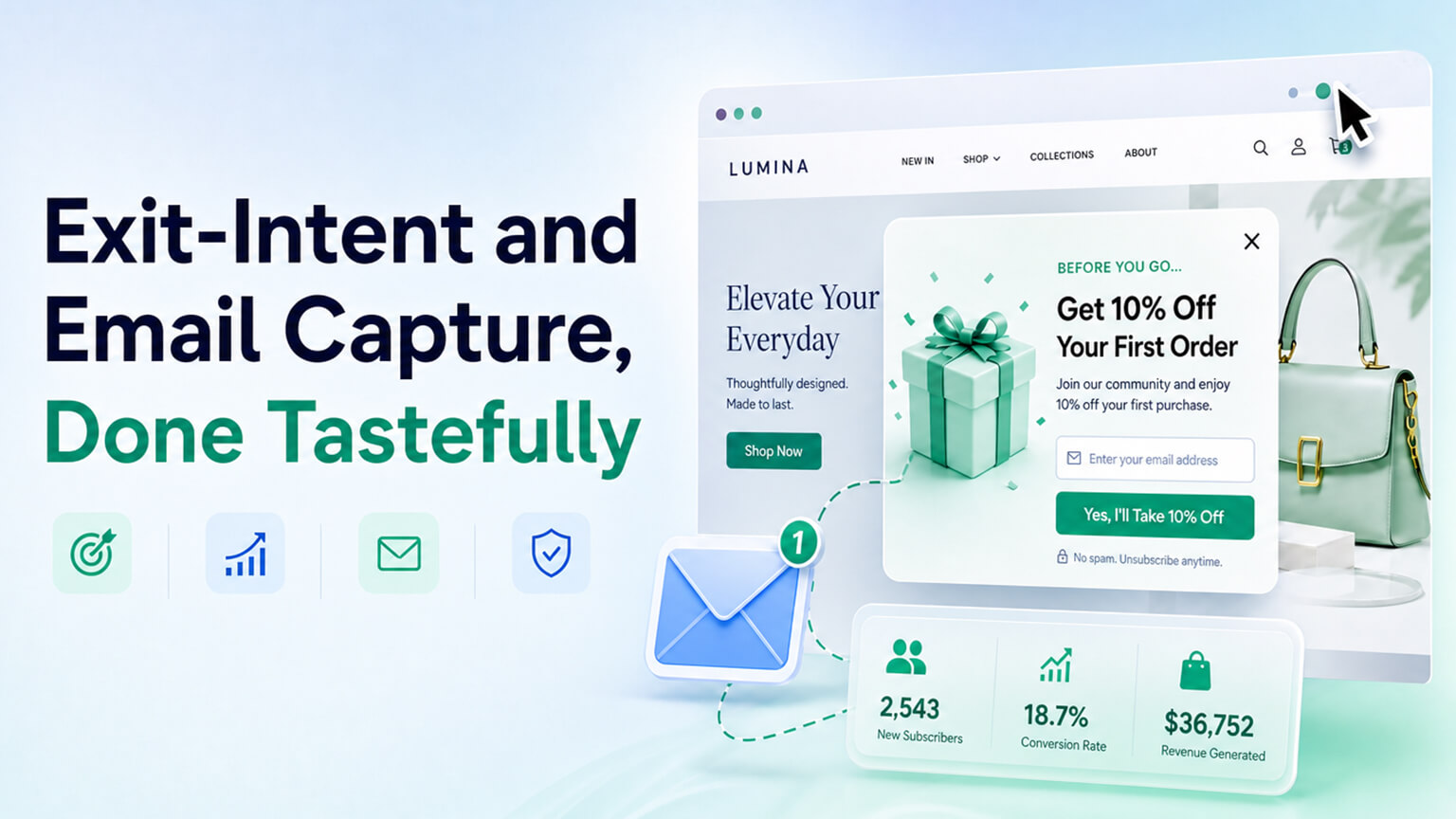
Email capture — getting visitors to join your email list — is valuable for ecommerce, because email is an owned channel (you own the relationship, not dependent on platforms or ad costs) that drives meaningful revenue (through the flows and campaigns the email-marketing discussion covers). And exit-intent popups — popups triggered when a visitor is about to leave — are a common email-capture tactic, catching people on their way out with an offer to join the list. Done well, email capture (including exit-intent) tastefully grows your list and recovers some leaving visitors, feeding your valuable email channel. Done badly — aggressive, intrusive, annoying popups — it harms the experience, frustrates visitors, and can hurt more than help. So the key is doing email capture, including exit-intent, tastefully and effectively: capturing emails (growing the valuable list) without annoying visitors or harming the experience. It’s a balance, and getting it right matters.
This piece covers why email capture matters, how to do it tastefully (the balance), exit-intent specifically, and the practices that make email capture effective without being annoying. Because the value (growing your owned email channel) is real, but so is the risk (annoying visitors with intrusive popups), so the goal is capturing the value tastefully. Let me walk through it.
Why email capture matters
Email capture matters because email is a valuable channel for ecommerce. Owned channel — email is owned (you own the list and relationship), unlike paid ads (which cost per click and depend on platforms) or social (algorithm-dependent), so it’s a stable, owned asset (as the first-party-data discussion covers). Drives revenue — email drives meaningful revenue through flows (welcome, abandonment, post-purchase) and campaigns (as the email-marketing discussion covers), so a bigger, engaged list means more email revenue. Captures interested visitors — many visitors who aren’t ready to buy now are still interested, and capturing their email lets you nurture them toward a purchase (rather than losing them entirely), recovering value from visitors who would otherwise leave. And compounds — a growing email list is a compounding asset (more subscribers, more email revenue over time), so email capture builds a valuable long-term asset.
So email capture matters because it grows your owned, revenue-driving, compounding email channel — capturing interested visitors (who aren’t ready to buy now but can be nurtured) into a valuable asset. This is why email capture is worth doing: it feeds the email channel that drives meaningful ecommerce revenue and builds a compounding owned asset. The question isn’t whether to capture emails (you should — it’s valuable) but how to do it well (tastefully and effectively), which is the balance the rest of this covers. So recognise email capture’s value (owned, revenue-driving, compounding channel) and do it — the goal is doing it tastefully, not skipping it.
Doing it tastefully: the balance
The key to email capture is the balance between effectiveness (capturing emails) and tastefulness (not annoying visitors). The risk — aggressive, intrusive email capture (popups that appear immediately, are hard to close, appear repeatedly, are intrusive or annoying) harms the experience, frustrates visitors, and can hurt your brand and conversion more than the captured emails help. The goal — capturing emails effectively while keeping the experience good (not annoying visitors), so you grow the list without the downsides. The balance — this means email capture that’s present and effective (it does capture emails) but tasteful (not intrusive, not annoying, respecting the visitor’s experience). Tasteful practices — capture that’s well-timed (not immediately on arrival, before the visitor has engaged), easy to dismiss (not hard-to-close or trapping), not repetitive (not showing repeatedly to someone who dismissed it), offering value (a reason to subscribe — a discount, content, early access), and well-designed (on-brand, not jarring).
So doing email capture tastefully means striking the balance: effective (it captures emails) but tasteful (well-timed, easy to dismiss, not repetitive, offering value, well-designed), so you grow the list without annoying visitors or harming the experience. This balance is the whole game — too timid (no capture) misses the value, too aggressive (intrusive popups) harms the experience, and the sweet spot is tasteful, effective capture. So aim for the balance: capture emails (don’t skip it — it’s valuable) but tastefully (well-timed, dismissable, non-repetitive, value-offering, well-designed), capturing the email-channel value without the annoyance downsides. The specific tactics (exit-intent and others) should all be executed within this tasteful balance.
Exit-intent specifically
Exit-intent popups — triggered when a visitor is about to leave (detected by cursor movement toward the browser controls, or other signals) — are a common and relatively tasteful email-capture tactic, for a specific reason. Catching leaving visitors — exit-intent triggers when the visitor is leaving anyway, so it’s a last chance to capture them (offering a reason to join the list or complete a purchase) rather than interrupting an engaged visitor. Less intrusive timing — because it triggers on exit (not immediately on arrival, not interrupting browsing), it’s less intrusive than popups that interrupt engaged visitors, making it relatively tasteful. Recovering value — it can recover some leaving visitors (capturing their email, or offering an incentive to stay/buy), recovering value from visitors who would otherwise leave with nothing. Common uses — exit-intent often offers a discount (a reason to join the list and buy) or email capture (join for content, offers), catching the leaving visitor with a reason to engage.
So exit-intent is a relatively tasteful email-capture tactic because it triggers when the visitor is leaving anyway (a last chance, not an interruption of engaged browsing), making its timing less intrusive while recovering value from leaving visitors. Done well — a tasteful, well-designed exit-intent popup offering genuine value (a discount, content) to leaving visitors — it can capture emails and recover some leaving visitors without annoying engaged ones. Of course, even exit-intent should be tasteful (easy to dismiss, not repetitive, offering real value, well-designed), within the overall balance. So exit-intent is a useful, relatively tasteful tactic — catching leaving visitors with a reason to engage — and worth using as part of tasteful email capture, executed well (genuine value, dismissable, well-designed).
Making email capture effective (within tastefulness)
Within the tasteful balance, several practices make email capture effective. Offer genuine value — give a real reason to subscribe (a discount, exclusive content, early access, something valuable), because people subscribe for value, not because asked, so a compelling offer drives sign-ups. Good timing — time capture well (exit-intent for leaving visitors, or after some engagement for others — not immediately on arrival before engagement), so it’s relevant and less intrusive. Clear, compelling messaging — make the offer and value clear and compelling (why subscribe, what they get), so the value is obvious. Easy sign-up — make subscribing easy (minimal friction — just email, not a long form), so it’s frictionless. Good design — well-designed, on-brand, not jarring capture (so it fits the experience). Test and optimise — test different offers, timing, messaging, and designs (as the A/B-testing discussion covers) to find what captures effectively without annoying. And honour the value — deliver on what you promised (the discount, the content), so subscribing was worth it and the relationship starts well.
So making email capture effective within tastefulness means offering genuine value (a compelling reason to subscribe), good timing (relevant, not intrusive), clear compelling messaging, easy sign-up (minimal friction), good on-brand design, testing and optimising, and honouring the promised value. These practices make capture effective (it captures emails) within the tasteful balance (not annoying). So execute email capture with these practices — genuine value, good timing, clear messaging, easy sign-up, good design, testing, honouring value — and you capture emails effectively while staying tasteful, growing your valuable email channel without the annoyance downsides. This is email capture done well: effective and tasteful, capturing the email-channel value while respecting the visitor experience.
A worked example: a skincare brand’s tasteful capture
Picture a skincare brand that wants to grow its list without the spammy feel its founder hates. Here’s a tasteful setup. For new visitors, no popup fires on arrival — the brand lets people browse first. After a visitor has engaged (viewed a couple of products, or spent a bit of time), a tasteful, on-brand slide-in (not a full-screen takeover) offers 10% off the first order for joining the list, with a single email field and a clear “no thanks” dismiss. If dismissed, it doesn’t reappear that session. For visitors showing exit intent (cursor heading for the close button, cart not yet purchased), a tasteful exit-intent popup offers the same incentive framed as “before you go” — a last chance to capture a leaving visitor with genuine value.
The brand tested the offer (10% off versus a free-sample-with-purchase versus a skincare guide), the timing (immediate versus after-engagement), and the design, and settled on what captured best without hurting the browsing experience or bounce. It honours the promise (the discount code arrives immediately and works), and the welcome flow then nurtures the new subscriber. The result is steady list growth from both engaged and leaving visitors, captured tastefully — no immediate interruptions, easy dismissal, no repetition, genuine value, on-brand design — feeding the email channel that drives a meaningful share of revenue. That’s the balance in practice: present and effective enough to grow the list well, tasteful enough that customers don’t feel hassled, with testing to find the sweet spot. The brand grows its owned channel without the annoyance that would cost it goodwill and conversions.
Capture methods beyond the popup
Popups (including exit-intent) get the attention, but they’re not the only way to capture emails, and the most tasteful programmes use a mix. Inline forms — a sign-up form sitting naturally in the footer, on the blog, or within content — capture interested visitors without interrupting anyone, because the visitor chooses to engage with them. They convert at lower rates than popups but cost nothing in experience, so they’re a tasteful always-on baseline. Embedded content offers — offering a useful resource (a sizing guide, a how-to, a lookbook) in exchange for an email, placed where it’s relevant, captures people who want the resource and starts the relationship on a value note.
Checkout and account capture — capturing email at checkout (with appropriate consent) or inviting account creation captures people already transacting, which is high-intent and low-friction. Spin-to-win and gamified popups — these can lift capture rates, but use them carefully: they can feel gimmicky and off-brand for premium stores, so they suit some brands and not others, and should be tested. Landing-page capture — dedicated landing pages (for a campaign, a launch, a waitlist) capture emails from people who arrived specifically interested. So think of capture as a system of complementary methods — tasteful always-on forms, value-based content offers, checkout/account capture, and well-judged popups including exit-intent — rather than relying on a single aggressive popup. A mix captures more emails across more visitor types, while keeping the overall experience tasteful, because no single method has to do all the work or be cranked up to an intrusive level.
Consent, deliverability, and starting the relationship right
Capturing the email is the start, not the end, and a few things determine whether that captured email becomes value or a liability. Consent and compliance — capture with proper consent (clear about what subscribing means, compliant with the relevant rules like GDPR/CAN-SPAM, with easy unsubscribe), because a list built on unclear or non-consensual capture creates legal risk and poor engagement. List quality over quantity — a smaller list of interested, properly-opted-in subscribers outperforms a big list of reluctant or tricked sign-ups, which hurt deliverability (low engagement signals to inbox providers that your mail is unwanted) and revenue. So tasteful capture (genuine value, clear consent) also builds a higher-quality, better-performing list, aligning tastefulness with results.
Starting the relationship right — once captured, the subscriber should get what was promised (the discount, the content) promptly, and enter a welcome flow that begins the relationship well (as the email-marketing discussion covers), turning the captured email into an engaged subscriber and eventual customer. A captured email that gets nothing, or gets bombarded, starts the relationship badly and wastes the capture. So treat capture as the front door to a relationship: capture tastefully and with consent, deliver the promised value, and nurture from there — which is what turns email capture into the revenue-driving, compounding asset it can be, rather than just a list of addresses. This end-to-end view (tasteful capture, consent, quality, good follow-through) is what makes email capture pay off.
The bottom line
Email capture is valuable for ecommerce because email is an owned, revenue-driving, compounding channel — capturing interested visitors (who aren’t ready to buy now but can be nurtured) into a valuable asset that drives meaningful revenue through flows and campaigns. So you should do email capture; the question is how to do it well. The key is the balance between effectiveness (capturing emails) and tastefulness (not annoying visitors): aggressive, intrusive capture (immediate, hard-to-close, repetitive popups) harms the experience and can hurt more than help, while tasteful capture (well-timed, easy to dismiss, non-repetitive, value-offering, well-designed) grows the list without the downsides. Exit-intent popups — triggered when a visitor is about to leave — are a relatively tasteful tactic, because they catch leaving visitors (a last chance, not an interruption of engaged browsing) with a reason to engage, recovering value from visitors who would otherwise leave, and their on-exit timing is less intrusive. Within the tasteful balance, make capture effective by offering genuine value (a compelling reason to subscribe), timing it well, using clear compelling messaging, making sign-up easy (minimal friction), designing it well (on-brand), testing and optimising, and honouring the promised value. Done this way — effective and tasteful — email capture (including exit-intent) grows your valuable email channel without annoying visitors or harming the experience. So don’t skip email capture (it’s valuable) and don’t do it aggressively (it backfires) — do it tastefully and effectively, capturing the email-channel value while respecting the visitor experience, which is email capture done right.
Frequently asked questions
Are exit-intent popups annoying?
They can be, if done badly (intrusive, hard to close, repetitive, offering nothing of value), but they’re actually one of the more tasteful capture tactics when done well, because they trigger when the visitor is leaving anyway — a last chance rather than an interruption of engaged browsing. A tasteful exit-intent popup (well-designed, easy to dismiss, not repetitive, offering genuine value like a discount or content) catches leaving visitors with a reason to engage without annoying engaged ones. So exit-intent isn’t inherently annoying; aggressive, value-free execution is what makes any popup annoying.
When should an email capture popup appear?
Not immediately on arrival, before the visitor has engaged — that’s intrusive and ineffective. Better timing is after some engagement (the visitor has viewed products or spent time, showing interest), or on exit-intent (catching a leaving visitor as a last chance). Time it to be relevant and less intrusive — when the visitor has shown some interest or is about to leave — rather than interrupting them the moment they arrive. Good timing is a big part of tasteful, effective capture, and it’s worth testing to find what works for your store.
What makes email capture effective without being annoying?
Offering genuine value (a real reason to subscribe — a discount, exclusive content, early access), good timing (after engagement or on exit, not immediately), clear compelling messaging (obvious value), easy sign-up (minimal friction — just email), good on-brand design (not jarring), not being repetitive (not showing again to someone who dismissed it), and honouring the promised value (delivering the discount or content). These practices make capture effective (it captures emails) within a tasteful balance (not annoying), so you grow the list without harming the experience. Testing different offers, timing, and designs helps find the sweet spot.
Is it worth using popups for email capture at all?
Yes, when done tastefully — email is a valuable owned, revenue-driving, compounding channel, and capture (including tasteful popups and exit-intent) grows it by capturing interested visitors who would otherwise leave. The mistake isn’t using capture; it’s doing it aggressively (intrusive, annoying popups) that harms the experience. Done tastefully (well-timed, dismissable, non-repetitive, value-offering, well-designed), capture grows your valuable email channel without the downsides. So don’t avoid email capture out of fear of annoying people — do it tastefully, capturing the value while respecting the experience.
Besides popups, how else can I capture emails tastefully?
Use a mix of methods. Inline forms (in the footer, on the blog, within content) capture interested visitors without interrupting anyone, making a good always-on baseline. Value-based content offers (a useful guide or resource in exchange for an email) capture people who want the resource and start the relationship on a value note. Checkout and account capture catches high-intent transacting visitors with low friction, and dedicated landing pages capture campaign or waitlist interest. A mix captures more emails across more visitor types while keeping the overall experience tasteful, so no single method has to be cranked up to an intrusive level — which is healthier than relying on one aggressive popup.
Does email capture quality matter, or is it just about list size?
Quality matters more than raw size. A smaller list of interested, properly-opted-in subscribers outperforms a big list of reluctant or tricked sign-ups, which hurt deliverability (low engagement tells inbox providers your mail is unwanted) and revenue. Capture with proper consent (clear about what subscribing means, compliant with rules like GDPR/CAN-SPAM, easy to unsubscribe), deliver the promised value promptly, and nurture with a welcome flow. Tasteful, consensual, value-based capture builds a higher-quality, better-performing list — so tastefulness and results align rather than conflict.