
The Real Cost of Owning a Headless Storefront
On this page
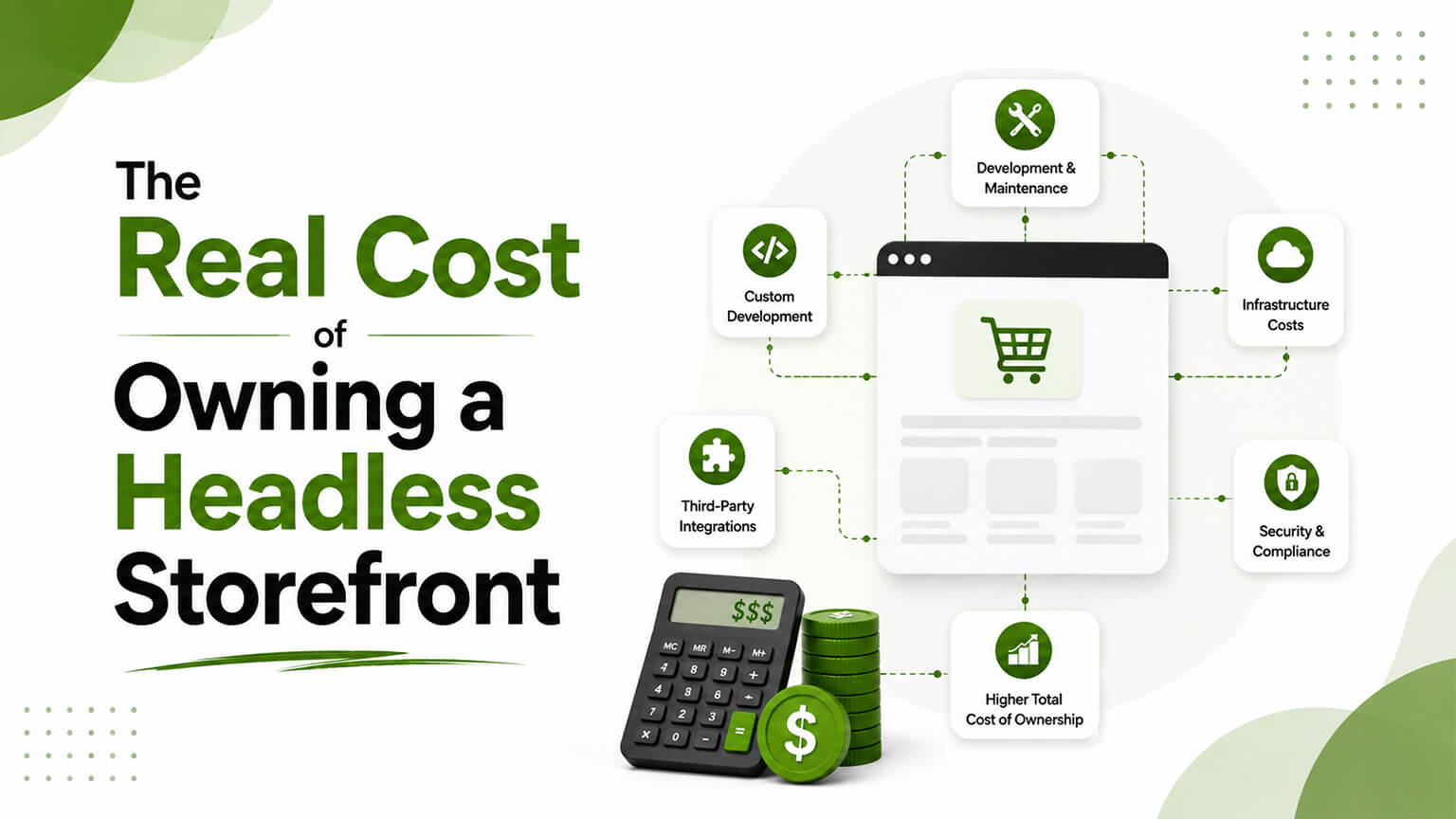
When brands evaluate going headless, they usually anchor on one number: the build quote. The agency says it’ll cost a certain amount to build the storefront, and that figure becomes “the cost of going headless” in everyone’s mind. It is not the cost of going headless. It’s the cost of starting to go headless — the down payment on a long-term commitment whose full price is considerably larger and spread across years. Misunderstanding this is the single most expensive mistake in the headless decision, and it’s incredibly common.
So let me do something the build quote doesn’t: lay out the real, total cost of owning a headless storefront over its life. Not to scare you off — for the right brand, the cost is justified — but so you can make the decision with the actual number in front of you rather than a flattering fraction of it. Total cost of ownership, not sticker price, is the only honest way to evaluate this.
Why total cost of ownership is the right lens
A headless storefront isn’t a product you buy; it’s an asset you operate. And operating it has ongoing costs that dwarf the initial build over any meaningful time horizon. Comparing the headless build quote against, say, the cost of a theme is comparing a multi-year commitment against a near-complete purchase, which is apples to oranges.
The right comparison is total cost of ownership over a realistic period — say three years — including everything: the build, the hosting, the maintenance, the expertise, the friction, the opportunity cost. When you tally that honestly, the picture often looks quite different from the build-quote-versus-theme comparison that brands usually make. Sometimes the TCO is still justified by the value headless delivers. Often it reveals that headless costs far more than it first appeared, and that a great theme would deliver most of the value for a fraction of the lifetime cost. Either way, you can’t make the call wisely without the full number, so let’s build it up piece by piece.
Cost 1: the upfront build
This is the part everyone knows about, so I’ll keep it short. Building a headless storefront — a custom web application — costs substantially more than configuring a theme, typically well into five or six figures for a serious build, because you’re building bespoke software rather than setting up an existing theme. The exact figure depends on complexity, design, integrations, and who builds it. This is real money, but it’s also, importantly, the smallest part of the lifetime cost for a storefront you keep for years. The build is the visible tip; the rest of this article is the iceberg underneath.
Cost 2: hosting and infrastructure
A theme is hosted by Shopify as part of your plan — you don’t think about it. A headless storefront needs its own hosting, because you’ve built a separate application. That might be Shopify’s Oxygen (for Hydrogen builds), or a platform like Vercel (common for Next.js), or another host. This is an ongoing cost the theme model simply doesn’t have, and depending on your traffic and setup it ranges from modest to significant. It’s not usually the biggest line item, but it’s a recurring cost that didn’t exist before and that you’ll pay every month for as long as the storefront runs. Add it to the tally.
Cost 3: ongoing maintenance (the big one)
Here’s the cost that dominates the TCO and that brands most underestimate. A headless storefront is custom software, and custom software requires continuous maintenance: keeping the framework and its dependencies current, fixing things when updates break them, adapting as Shopify’s APIs evolve, addressing security updates, and resolving the bugs and issues that surface over time. This isn’t optional — neglect it and the storefront decays, slows, and eventually breaks.
This maintenance requires development capacity, whether that’s in-house engineers (salary) or an agency retainer (monthly fee). Either way, it’s a substantial, ongoing cost, and over three years it frequently exceeds the original build cost. A theme, by contrast, has much of its underlying maintenance handled by Shopify and the theme’s framework — you’re not paying to keep the platform working. So this is the line item where headless and theme diverge most dramatically over time, and it’s the one most often left out of the initial comparison entirely. When someone compares “the headless build quote” against “a theme” and concludes headless is reasonable, the omission of years of maintenance cost is usually why the conclusion is wrong. Maintenance is not a footnote; it’s arguably the main event of the TCO.
Cost 4: the expertise you have to keep on hand
Related to maintenance but worth separating: headless requires ongoing access to specialized expertise, and that has a cost beyond the hours. You need people who can work on a custom storefront built with frameworks like Hydrogen or Next.js — not just any developer, but ones competent in your specific stack. Whether that’s hiring and retaining engineers (and the management overhead that comes with a technical team) or maintaining a relationship with a capable agency, you’re committing to keeping that expertise available.
This is a real, sometimes hidden, cost. With a theme, a much broader pool of developers can help you, and you need them less often, so the expertise cost is lower and more flexible. With headless, you’re more dependent on specialized skills, which can mean higher costs and more risk if your key person leaves or your agency relationship ends. The cost of access to the right expertise, reliably, over years belongs in the TCO, and it’s higher and less flexible for headless than for a theme.
Cost 5: ecosystem friction
This one’s subtle and easy to miss until you’re living it. The Shopify app ecosystem largely assumes a standard theme. Many apps “just work” when you install them on a theme — they inject what they need and function. In a headless setup, some of those apps don’t just work; they require custom integration because the storefront they expected isn’t there. So functionality you’d get nearly for free on a theme can become a custom development task on headless.
The cost shows up over time: every time you want to add a tool or capability that would’ve been a simple app install on a theme, you potentially face custom integration work on headless. Multiply that across the life of the store and the many tools a growing brand adds, and it’s a recurring drag on both budget and agility — you move slower and pay more to add things that theme-based competitors add in an afternoon. This friction cost rarely appears in any quote, but it’s a genuine, ongoing tax of the headless model, and it compounds as your needs evolve.
Cost 6: the supporting stack
Headless often goes hand in hand with additional tools that have their own costs. The classic example is a headless CMS — if part of your reason for headless is better content management, you’re likely adding a dedicated CMS, which is another subscription and another system to manage and integrate. You might add specialized search, monitoring tools, error tracking, and other infrastructure that a theme-based store either doesn’t need or gets more simply. Each of these is part of the real cost of operating the composable, headless setup. They’re often worthwhile — that best-of-breed stack is part of headless’s appeal — but they’re costs, and they belong in the honest tally rather than being treated as free extras.
Cost 7: monitoring and reliability
Because you own the application, you own its reliability. That means monitoring (is the storefront up, is it fast, are there errors?), responding when something goes wrong, and the cost — financial and reputational — of downtime or performance regressions that you’re now responsible for catching and fixing. A theme on Shopify benefits from Shopify’s infrastructure and reliability; a headless storefront’s uptime and performance are, to a greater degree, your problem. Building and maintaining the monitoring and response capability to own that reliability is another cost the theme model largely absorbs for you. It may not be huge, but it’s real, and it’s another thing that’s yours now that wasn’t before.
Cost 8: opportunity cost
Finally, the cost that’s invisible on any invoice but often the largest in reality. Every dollar and every hour of engineering attention spent building and maintaining a headless storefront is a dollar and an hour not spent on something else — marketing, product, merchandising, customer experience, expansion. For most brands, those alternatives would generate more return than a headless storefront delivers over a great theme.
So even setting aside the direct costs, there’s the question of what else those resources could have done. If headless consumes engineering capacity and budget that would otherwise have driven growth, the opportunity cost can exceed all the direct costs combined. This is why “can we afford it?” is the wrong question; the right one is “is this the best possible use of these resources?” For most stores, the honest answer is no — the same resources would do more good elsewhere, which makes the true cost of headless not just its TCO but everything that TCO crowded out.
A rough three-year picture
Let me sketch the shape without pretending to precise numbers, since yours will vary. Over three years, a theme-based store’s costs are: the build or setup (modest), the Shopify plan (which you’d pay anyway), and occasional improvement work. The platform and much of the maintenance are handled for you. The total is relatively contained and predictable.
A headless store’s three-year costs are: the larger upfront build, plus three years of hosting, plus three years of maintenance (often exceeding the build), plus the cost of keeping specialized expertise available, plus ecosystem-friction costs as you add capabilities, plus the supporting stack (CMS and other tools), plus monitoring and reliability, plus the opportunity cost of all that money and attention. Add it up and the headless TCO is dramatically higher than the build quote alone suggested — frequently a large multiple of it once the years of operation are counted.
The point of the sketch isn’t a specific figure; it’s the shape. The build quote you anchored on might be a fraction, sometimes a small fraction, of what owning the headless storefront actually costs over its life. Seeing the full shape is what lets you decide honestly.
When the full cost is justified
None of this means headless is never worth it. For brands with genuine, specific needs a theme can’t meet, and the scale where the benefits are substantial, the full TCO can be entirely justified — the performance edge, the content flexibility, the composable best-of-breed stack deliver enough value to outweigh the real, considerable cost. Large, sophisticated operations frequently clear this bar, which is exactly why headless exists and thrives at that level.
The test is whether the value headless delivers over a great theme (not over a neglected one) exceeds its full TCO (not just its build quote). When you frame it that honestly — real incremental value versus real total cost — the brands for whom it pencils out are the ones with specific needs and the scale to make the most of headless’s strengths. For them, it’s a sound investment. For everyone else, the honest TCO reveals what the build quote concealed: that headless costs far more than it first appeared, for benefits a great theme would have largely delivered anyway.
How to budget honestly
If you’re seriously considering headless, budget for the whole thing, not the build. Ask your prospective partner not just “what does it cost to build?” but “what will it cost to maintain, per year, and what expertise do we need to keep available?” Factor in hosting, the supporting stack, and the ecosystem friction of adding capabilities later. And put a number, even a rough one, on the opportunity cost. Then compare that honest three-year TCO against what a great theme would cost over the same period, including the value difference. That comparison — full TCO versus full TCO, with real incremental value in view — is the one that leads to a good decision. The build-quote-versus-theme comparison that most brands actually make leads to a lot of regret.
The cost of changing your mind later
One more cost worth naming, because it’s the cost of being wrong: switching away from headless, if you decide it wasn’t the right call, is itself expensive. Once you’ve built a custom storefront and run it for a while, moving back to a theme (or to a different approach) means another project — rebuilding the storefront experience, migrating whatever’s accumulated, and absorbing the disruption. Headless is a costlier decision to reverse than staying on a theme, which is exactly why getting the decision right upfront matters so much.
This asymmetry is worth weighing in the TCO conversation. A theme-based store that later needs headless can move to it with relatively little lost — it got an effective store in the meantime and goes headless when justified. A headless store that turns out not to have needed it is stuck with the cost and maintenance until it undertakes another project to unwind the decision. So the downside of wrongly choosing a theme is small (you can upgrade later if a real need appears); the downside of wrongly choosing headless is large (you’ve committed to years of cost for benefits you didn’t need, and reversing it is its own expense). When a decision’s costs are this asymmetric, it argues for caution before committing to the expensive-to-reverse option — another reason the full-cost lens matters, since it’s the only way to see clearly enough to avoid an error that’s painful to undo.
A note for brands already on headless
If you’re reading this and you’re already headless, the message isn’t “you made a mistake” — it’s “make sure you’re getting the value you’re paying for.” Since you’re carrying the full TCO regardless, the goal is to ensure headless is actually delivering the performance, flexibility, and capability that justify it. Are you exploiting the strengths that made headless worthwhile — the speed, the content flexibility, the composable stack — or paying for a complex setup while using it like a fancier theme? Is it well-maintained, or quietly decaying because the maintenance got deprioritized? Is the supporting stack earning its cost? For brands already headless, the productive question is optimization, not regret: get the full value from the considerable cost you’re already bearing, and if you find you’re paying headless prices for theme-level benefit, that’s worth confronting honestly rather than ignoring.
The bottom line
The build quote is the down payment, not the price. The real cost of owning a headless storefront includes the upfront build plus, over its life, hosting, substantial ongoing maintenance (often exceeding the build), the cost of keeping specialized expertise available, ecosystem friction as you add capabilities, a supporting stack of additional tools, monitoring and reliability, and the opportunity cost of all that money and attention. Tallied honestly over three years, the total is frequently a large multiple of the build quote — and dramatically higher than a theme’s lifetime cost, which Shopify largely absorbs for you. For brands with specific needs and the scale to exploit headless’s strengths, that full cost can be justified by real value. For most brands, the honest TCO reveals that headless costs far more than the build quote suggested, for benefits a great theme would have mostly delivered. Evaluate the whole iceberg, not the tip, and compare full cost to full cost — that’s the only way to decide whether headless is an investment or an expensive mistake.
Frequently asked questions
What’s the real cost of going headless beyond the build?
The build is the smallest part over time. The full cost includes ongoing hosting, substantial maintenance (keeping frameworks and dependencies current, fixing breakages, adapting to API changes — often exceeding the build cost over a few years), keeping specialized expertise available, ecosystem friction when adding tools that would’ve been simple app installs on a theme, a supporting stack like a headless CMS, monitoring and reliability, and the opportunity cost of all that money and attention.
Why is headless maintenance so expensive?
Because a headless storefront is custom software you own and must keep working forever — updating frameworks and dependencies, fixing what breaks, adapting to Shopify’s evolving APIs, handling security. This requires ongoing development capacity (in-house salary or an agency retainer). A theme, by contrast, has much of its underlying maintenance handled by Shopify and the theme framework, so this is where headless and theme costs diverge most over time.
How does headless TCO compare to a theme over a few years?
Typically much higher. A theme’s multi-year cost is relatively contained — setup plus your Shopify plan plus occasional improvements, with the platform and maintenance largely handled for you. A headless storefront adds hosting, heavy ongoing maintenance, expertise costs, ecosystem friction, supporting tools, monitoring, and opportunity cost — frequently totaling a large multiple of the build quote and far exceeding a theme’s lifetime cost.
Is the cost of headless ever worth it?
Yes, for the right brand. Those with genuine, specific needs a theme can’t meet and the scale to exploit headless’s strengths can find the full TCO justified by real value — performance edge, content flexibility, a composable best-of-breed stack. The test is whether headless’s value over a great theme exceeds its full total cost of ownership (not just its build quote). For most brands it doesn’t; for large, sophisticated operations it often does.