
Subscriptions on Shopify: Building Recurring Revenue That Doesn’t Churn
On this page
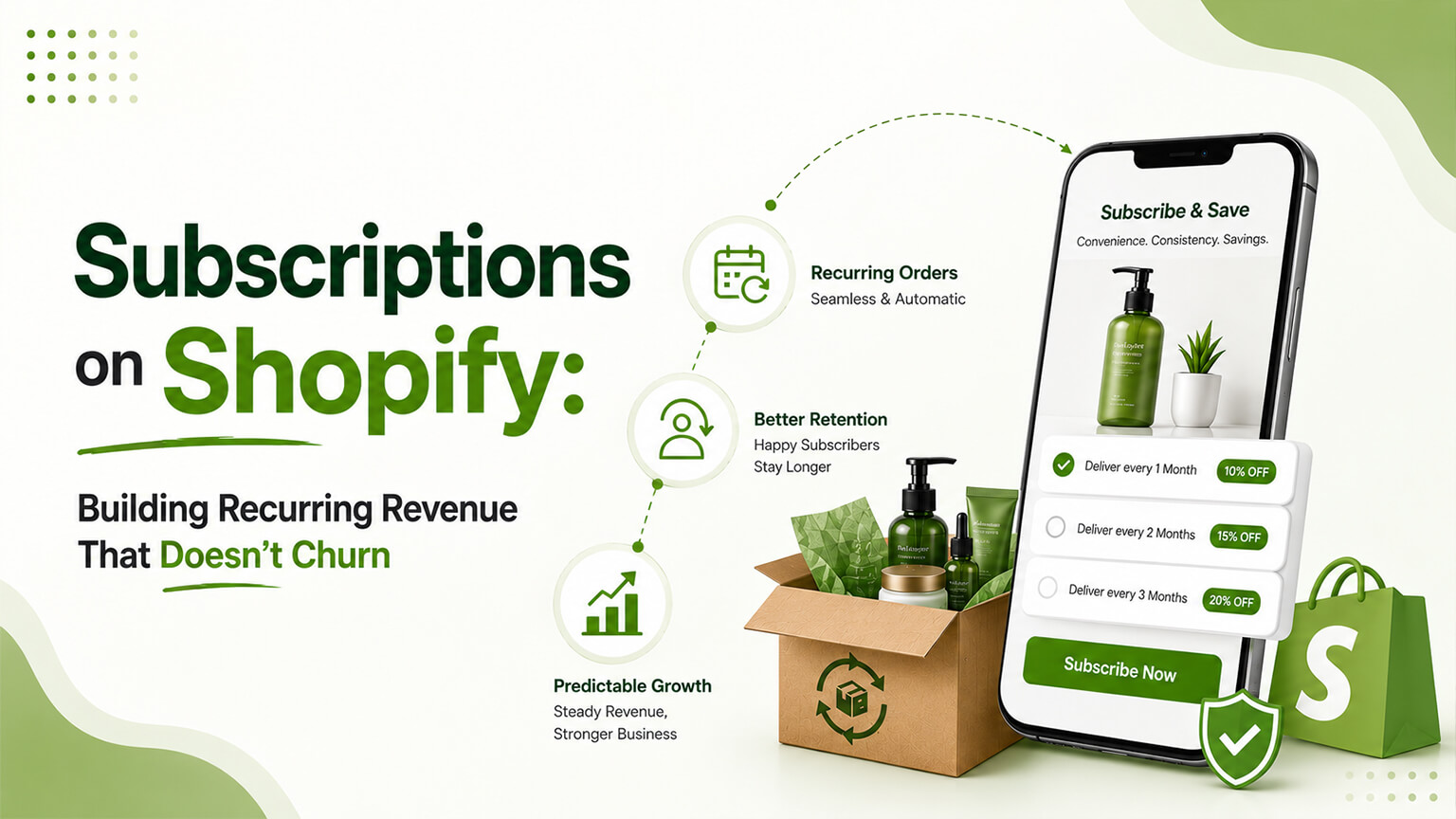
Subscriptions are the prize a lot of ecommerce brands chase, and for good reason. Recurring revenue is more predictable, more valuable, and easier to plan around than one-off sales, and a subscriber is worth far more over time than a single-purchase customer. The pitch writes itself: turn one-time buyers into a recurring revenue base, smooth out your cash flow, build a business worth more. So brands bolt on a subscription option, celebrate the early sign-ups, and then watch those subscribers quietly cancel over the following months until the recurring base they imagined never quite materializes.
That gap — between signing people up and keeping them — is where subscription businesses are won or lost, and it has a name: churn. Building recurring revenue that actually sticks is far more about beating churn than about acquiring subscribers, and most brands underinvest in exactly the part that matters most. So this article is mostly about retention, because that’s where the money is. Let me cover why subscriptions are worth it, what makes them work, and above all how to keep subscribers from leaking away.
Why subscriptions are worth chasing
Start with why this is worth the effort, because it justifies the work that follows. A subscriber generates revenue repeatedly rather than once, so their lifetime value dwarfs a single-purchase customer’s — which means you can afford to acquire them more aggressively and still come out ahead. Recurring revenue is predictable, letting you forecast, plan inventory, and manage cash flow with confidence a one-off-sales business never has. And a business with a solid recurring revenue base is simply worth more, valued higher, because that predictability and retention are exactly what investors and acquirers prize.
For the right product, subscriptions can transform the economics of the whole business. The catch in “for the right product” matters, though, so let’s address fit before mechanics.
What makes a good subscription product
Subscriptions work brilliantly for some products and awkwardly for others, and forcing them where they don’t fit is a common early mistake. The natural fits are consumables and replenishables — things people use up and need more of on a predictable cadence. Coffee, supplements, skincare, pet food, razors, household staples. The subscription is convenient here because it automates a repurchase the customer would have to make anyway, so it serves the customer as much as the brand.
Curated or discovery subscriptions (a box of new things each period) are a different model that can work but lean more on novelty and curation than convenience, and they often face higher churn because the value proposition is “delight me repeatedly,” which is harder to sustain than “automatically restock what I need.” And some products simply don’t suit subscriptions — durable goods people buy once, irregular purchases — where bolting on a subscription option just adds clutter nobody uses.
So before investing in subscriptions, be honest about whether your product suits the model. When it does (especially consumables with a natural replenishment cycle), subscriptions are one of the highest-leverage things you can build. When it doesn’t, no amount of subscription tooling will create recurring demand that the product doesn’t naturally generate.
The tools
On Shopify, subscriptions are powered by subscription apps, with Recharge being the established leader, handling the recurring billing, subscription management, customer portal, and the mechanics of turning products into subscribe-able offerings. The platform side has matured too, with subscriptions integrating into the modern Shopify checkout. The tooling is solid and well-trodden; the hard part isn’t the technology, it’s the strategy and execution around retention. So while you need a capable subscription tool, don’t mistake having one for having a successful subscription program — the tool enables it, but beating churn is where the actual work lives.
The two kinds of churn
Here’s the concept that organizes everything about retention: churn comes in two distinct forms, and they have completely different causes and fixes. Understanding the split is the key to attacking churn effectively, because most brands lump them together and miss that one of them is largely a solved, mechanical problem.
Voluntary churn is when a customer actively decides to cancel — they don’t want the subscription anymore, or not on these terms. This is about the value proposition, the experience, flexibility, and whether the subscription keeps earning its place in their life.
Involuntary churn is when a subscription lapses not because the customer chose to leave, but because a payment failed — an expired card, an insufficient balance, a declined transaction. The customer didn’t decide to cancel; the billing just broke, and if nothing recovers it, you lose a subscriber who actually wanted to stay. This is often a shockingly large share of total churn, and it’s the most recoverable, which is why it’s the place to start.
Beating involuntary churn (the biggest easy win)
Involuntary churn is the closest thing to free money in subscription retention, because you’re recovering customers who never wanted to leave — the billing just failed. The fix is dunning: the process of automatically handling failed payments to recover them. When a payment fails, a good dunning process retries the charge intelligently (cards sometimes fail temporarily and succeed on retry), notifies the customer to update their payment method, and gives them easy ways to fix it before the subscription lapses.
Done well, dunning recovers a substantial portion of failed-payment churn — subscribers who’d otherwise have silently dropped off, kept simply because the system tried again and prompted them to update an expired card. The leverage here is enormous relative to the effort: you’re not convincing anyone to want your product (they already do), you’re just making sure a billing hiccup doesn’t cost you a willing customer. Smart retry logic, clear and timely “update your payment” messaging, and an easy way to fix it are the components. This is the first place to invest in retention, because it recovers revenue you’re currently losing to a purely mechanical problem, and it’s largely a set-up-once-and-it-works improvement.
Beating voluntary churn (the harder, ongoing work)
Voluntary churn is the harder problem, because it’s about the customer deciding the subscription isn’t worth continuing. But a lot of voluntary churn is preventable, and much of it comes down to flexibility, value, and experience.
Flexibility is huge. A great deal of cancellation happens because the customer’s situation changed — they have too much product, they’re going away, the timing’s off — and if their only option is “cancel,” they cancel. If instead they can easily skip a delivery, pause for a while, change the frequency, swap products, or adjust quantities, they stay subscribed through the situation that would otherwise have ended it. The single most effective voluntary-churn reducer is making it easy for customers to flex their subscription rather than forcing a binary stay-or-cancel choice. Counterintuitively, making it easy to pause or skip reduces cancellations, because it turns “I need to stop this” into “I’ll just skip this month.”
Ongoing value matters too. The subscription has to keep earning its place. For consumables, the convenience and any savings carry a lot of the value, but reminding customers of that value, keeping the products desirable, and not letting the subscription feel stale all help. For curated/discovery subscriptions, sustaining the delight is the whole challenge.
And the cancellation experience itself is a moment to address voluntary churn — not by trapping people (which breeds resentment) but by offering alternatives at the point of cancellation: “would pausing work better?”, “want to change frequency?”, a win-back offer where appropriate. Catching the cancellation intent and offering a flex instead of a goodbye recovers a meaningful slice of would-be churners.
The customer portal is your retention engine
If there’s a single piece of the subscription experience that determines retention, it’s the customer portal — the place where subscribers manage their subscription. A great portal makes flexing easy (skip, pause, swap, change frequency, adjust quantity, update payment) with a clean, intuitive experience. A poor portal — clunky, confusing, hard to find, or one that makes managing a subscription so annoying that cancelling feels easier than adjusting — actively drives churn.
This is why customizing and improving the subscription portal is some of the highest-value subscription work there is. The default portal experience is often functional but generic, and investing in a branded, intuitive portal where customers can effortlessly do all the flexing that keeps them subscribed pays off directly in retention. When the easy path is “adjust to fit my life” rather than “cancel because adjusting is a hassle,” far more subscribers stay. The portal is where the flexibility that beats voluntary churn actually lives or dies, so it deserves real attention rather than being left as the app’s out-of-the-box default.
Onboarding and the critical first periods
A lot of churn happens early, in the first few billing cycles, before the subscription habit has formed. So the onboarding and early experience matter disproportionately. Setting clear expectations (when will I be billed, when will it arrive, how do I manage it), making sure the first deliveries go smoothly, helping the customer get value from the product early, and proactively showing them how to manage their subscription all reduce that early churn.
The goal in the first periods is to get the subscriber past the fragile early stage into the habit, where the subscription becomes a settled part of their routine rather than a recurring decision they keep reconsidering. A strong onboarding experience — welcoming, clear, value-focused — invests in retention right where churn risk is highest. Neglect the early experience and you lose subscribers before they ever became sticky.
Lifecycle messaging ties it together
Email and SMS lifecycle messaging (covered in the Klaviyo discussion) is the connective tissue of subscription retention, and a subscription program should be tightly integrated with it. Onboarding sequences for new subscribers. Reminders before billing or shipping (transparency builds trust and reduces surprise-driven cancellations). Win-back flows for cancelled subscribers. Re-engagement for those showing churn signals. And the dunning-related messaging for failed payments. The subscription tool and the messaging platform working together — Recharge and Klaviyo, commonly — is how you operationalize much of the retention strategy above, turning “we should reduce churn” into automated flows that actually do it. Retention isn’t a one-time setup; it’s an ongoing program of messaging and experience that the right tools, well integrated, make manageable.
The metrics that matter
To manage subscription retention, watch the right numbers. Churn rate, ideally split into voluntary and involuntary so you can see how much is the recoverable failed-payment kind. Lifetime value, which is the whole point — rising LTV means your retention work is paying off. Retention curves (what percentage of subscribers remain after one month, three, six, twelve), which show where in the lifecycle you’re losing people and where to focus. And the recurring revenue base itself and its growth. These tell you whether you’re building a durable recurring business or a leaky bucket of sign-ups that drain away. The brands that win at subscriptions watch retention metrics obsessively, because they understand that retention, not acquisition, is where subscription value is made or lost.
Common mistakes
A few traps to close on. Focusing on subscriber acquisition while neglecting retention — celebrating sign-ups while churn quietly drains them, which is the cardinal subscription error. Ignoring involuntary churn, leaving the easiest recoverable revenue on the table. Making subscriptions hard to manage, so customers cancel rather than flex. Forcing subscriptions onto products that don’t suit the model. Trapping people with hard-to-cancel subscriptions, which breeds resentment, chargebacks, and reputational damage (and increasingly runs into regulation around easy cancellation). And treating subscriptions as set-and-forget rather than an ongoing program of retention work. Avoid these, and you sidestep most of the reasons subscription programs underdeliver.
A worked example: where the churn was actually hiding
Let me make the churn split concrete, because it changes where you’d spend your effort. Picture a supplement brand frustrated that its subscription base keeps stalling — for every new subscriber, an existing one seems to drop off, so the recurring revenue never compounds. The instinct is to assume the product or offer is the problem and to start tinkering with the value proposition or adding discounts to win people back.
But when you actually break the churn down, the picture often surprises. A large chunk turns out to be involuntary — subscriptions lapsing on failed payments, expired cards, declines, with no real dunning process catching them. These are customers who never decided to leave; the billing just broke and nothing recovered it. Fixing that — smart retries, timely “update your card” prompts, an easy way to fix it — recovers a meaningful share of the churn immediately, without convincing anyone of anything, because they wanted to stay all along. That’s often the single biggest, fastest retention win available, and it was invisible until someone split voluntary from involuntary.
Then, digging into the voluntary churn, more surprises: a lot of cancellations cluster around customers having too much product or a timing problem, and the portal only offered “cancel,” not “skip” or “pause.” Adding easy flexibility converts a chunk of those cancellations into skips — the customer stays subscribed through the situation that would otherwise have ended it. The lesson is that “our subscriptions churn” is too coarse a diagnosis to act on. Split it, find where the leak actually is (often failed payments and a rigid portal, not the product), and fix the specific thing. The brand that does this frequently discovers its product and offer were fine all along — the churn was mechanical and experiential, and far more fixable than “people don’t want our subscription” would have suggested.
Getting the offer and pricing right
A word on the offer itself, since it shapes both acquisition and retention. The most common subscription model for consumables is subscribe-and-save: a modest recurring discount in exchange for the commitment, which gives the customer a clear reason to subscribe (savings plus convenience) and you predictable recurring revenue. The discount has to be balanced — generous enough to motivate subscribing, not so steep it erodes your margin to the point the recurring revenue isn’t worth much. Prepaid options (commit to several periods upfront, often at a better rate) can improve retention and cash flow because the customer has pre-committed, though they raise the barrier to starting.
The offer should make subscribing feel like the obviously smart choice for a customer who’s going to keep using the product anyway — convenient, a little cheaper, easy to control. Where brands go wrong is either making the subscription barely more attractive than one-off buying (so why commit?) or discounting so aggressively that subscribers are unprofitable. Getting that balance right, and presenting the subscription option clearly at the point of purchase, drives healthy subscription adoption. But remember the theme of this whole piece: a great offer that acquires subscribers still bleeds value if churn isn’t handled, so the offer is the front door and retention is the house. Get people in the door with a sensible, attractive offer, then keep them with dunning, flexibility, a great portal, and good onboarding. Both halves matter, but the retention half is the one most brands neglect and the one where the durable value is built.
The bottom line
Subscriptions can transform a Shopify store’s economics — predictable recurring revenue, higher lifetime value, a more valuable business — but only if you beat churn, and beating churn, not acquiring subscribers, is where the real work and the real money are. Make sure your product suits the model (consumables and replenishables are the natural fit). Then attack churn in both its forms: recover involuntary churn with smart dunning, which is close to free money since those customers wanted to stay; and reduce voluntary churn by making subscriptions flexible (easy to skip, pause, swap, adjust), keeping the value evident, and building a customer portal that makes flexing effortless rather than making cancellation the path of least resistance. Invest in onboarding and the fragile early periods, tie it all together with lifecycle messaging, and watch your retention metrics obsessively. Do that, and you build recurring revenue that actually sticks — a durable, compounding base rather than a leaky bucket of sign-ups that drain away as fast as you fill it.
Frequently asked questions
What’s the biggest factor in subscription success?
Retention, not acquisition. Most brands focus on signing subscribers up while neglecting churn, then watch their recurring base leak away. Building recurring revenue that sticks is mostly about beating churn — recovering failed payments and reducing voluntary cancellations — which is where the real work and the real money are. A subscription program lives or dies on retention.
What’s the difference between voluntary and involuntary churn?
Voluntary churn is when a customer actively decides to cancel — about value, flexibility, and experience. Involuntary churn is when a subscription lapses because a payment failed (expired card, declined transaction), not because the customer chose to leave. Involuntary churn is often a large share of the total and the most recoverable, via smart dunning, which makes it the best place to start.
How do I reduce subscription cancellations?
Make subscriptions flexible — easy to skip, pause, swap products, or change frequency — because a lot of cancellation happens when someone’s situation changes and “cancel” is their only option. Counterintuitively, making it easy to pause or skip reduces cancellations by turning “I need to stop this” into “I’ll just skip this month.” A great customer portal that makes flexing effortless is the engine of this.
Do subscriptions work for any product?
No. They work brilliantly for consumables and replenishables — things people use up and need more of on a predictable cadence (coffee, supplements, skincare, pet food) — where the subscription serves the customer by automating a repurchase. They fit awkwardly on durable or irregular-purchase products, where bolting on a subscription just adds clutter. Be honest about whether your product naturally generates recurring demand before investing.