
Is Headless Shopify Worth It? An Honest Cost-Benefit Breakdown
On this page
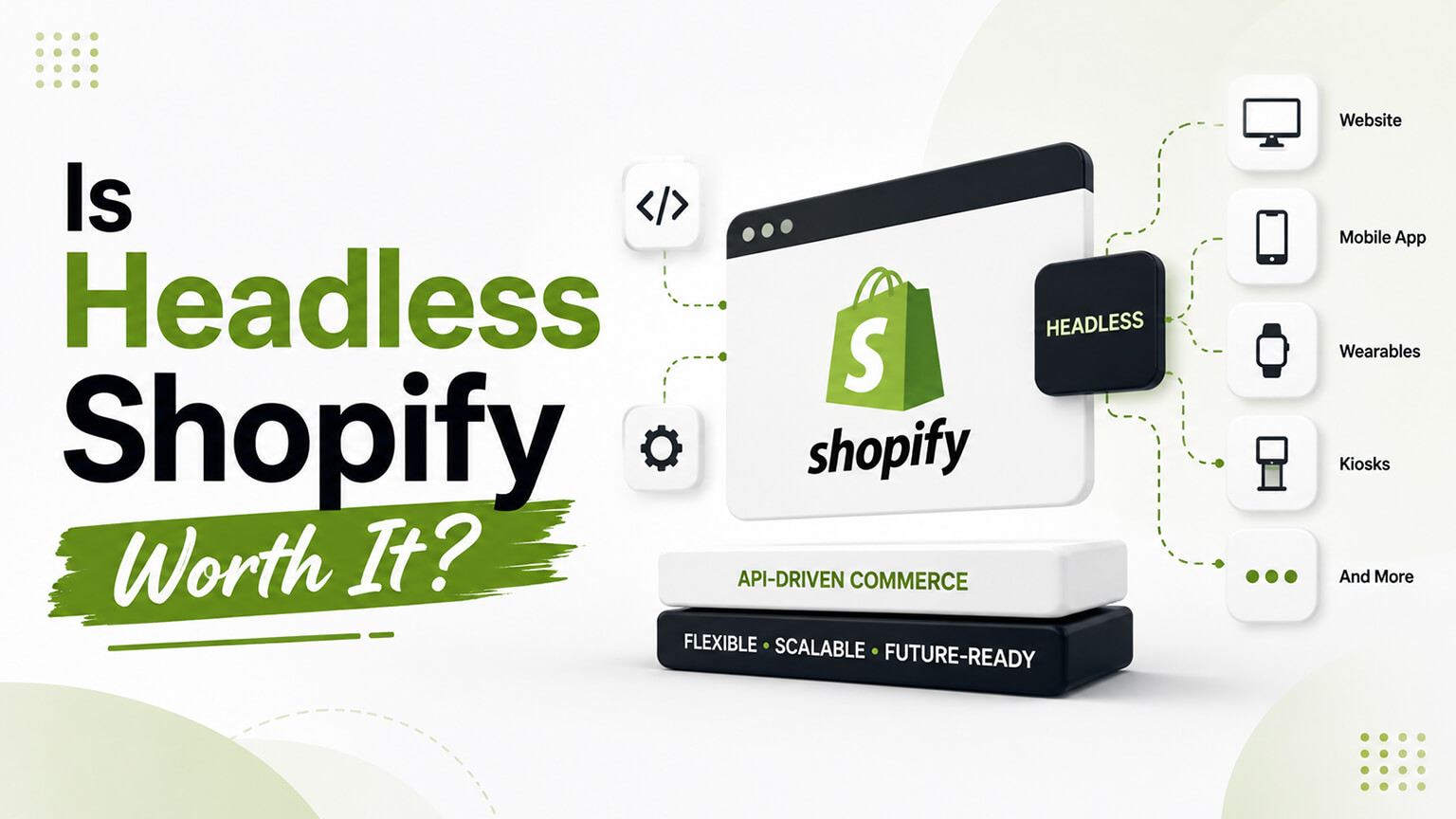
Headless commerce is one of those topics where the loudest voices have something to sell. Agencies that specialize in it will tell you it’s the future and you’re behind if you haven’t moved. Theme purists will tell you it’s an overcomplicated money pit. Both are exaggerating, and the truth — as usual — depends entirely on your specific situation. This is an attempt at a straight answer, written without a thumb on either side of the scale.
I’ll define it plainly, lay out the real benefits and the real costs, and give you a way to judge whether it’s worth it for your store. Spoiler: for most stores it isn’t, and that’s fine. For a specific kind of store it absolutely is. The skill is knowing which you are before you spend the money.
What headless actually means
In a normal Shopify store, the storefront customers see and the commerce engine that runs everything are tied together — Shopify generates your pages using its theme system and Liquid. “Headless” means separating those two. You keep Shopify’s commerce engine (the catalog, the cart, the secure checkout, the admin) but build the storefront — the part customers actually look at — separately, using a modern web framework like Hydrogen (Shopify’s own React-based framework) or Next.js. That custom front end pulls data from Shopify through an API.
The “head” is the front end; going headless means detaching it and building your own. You’re not leaving Shopify — you’re replacing the storefront layer while keeping everything else. That’s the crucial point people miss: headless isn’t an alternative to Shopify, it’s a different way of building the front of a Shopify store.
The genuine benefits
Headless offers real advantages, and it’s worth being precise about them rather than waving vaguely at “performance” and “flexibility.”
Performance ceiling. A well-built headless storefront can achieve performance a theme struggles to match — faster loads, smoother interactions, top-tier Core Web Vitals — through fine-grained control over exactly what loads and when, modern rendering techniques, and edge delivery. The key phrase is “can” and “well-built.” Headless doesn’t make a store fast automatically; it raises the ceiling, and a poorly built headless store can be slower than a good theme. The advantage is potential, not a guarantee.
Total design and experience freedom. Because you’re building the front end from scratch, you can create experiences a theme can’t — complex interactions, app-like behavior, unusual layouts, custom animations, deeply integrated content. If your brand vision exceeds what any theme allows, headless removes the ceiling entirely.
Composable architecture. Headless lets you assemble a best-of-breed stack — pairing Shopify’s commerce with a separate specialized CMS for content, a dedicated search provider, and other tools — each chosen for being excellent at its job rather than accepting an all-in-one’s compromises. For content-heavy brands especially, plugging in a powerful headless CMS while keeping Shopify for commerce is a real draw.
Keeping Shopify’s checkout. A reassuring point: most headless builds retain Shopify’s secure, high-converting, PCI-compliant checkout. You get the front-end freedom without taking on the enormous burden and risk of building your own checkout. You’re replacing the storefront, not the riskiest part of the system.
The real costs
Now the other side, which the enthusiasts tend to mumble through. These costs are not minor.
Higher upfront cost. Headless builds cost substantially more than themes — you’re building a custom web application, not configuring a theme. The investment runs well into five or six figures for serious builds. That’s money not spent on inventory, ads, or other growth, so the return has to justify it.
Ongoing maintenance and complexity. This is the cost people underestimate most. A headless storefront is a custom application you have to maintain — frameworks update, dependencies need attention, things break in ways a managed theme doesn’t. You need ongoing development capacity, whether in-house or via an agency. With a theme, a lot of maintenance is handled for you; with headless, it’s yours, indefinitely.
Longer time to launch. Building a custom storefront takes longer than configuring a theme — months rather than weeks for anything substantial. If speed to market matters, that’s a real cost.
You lose some Shopify conveniences. Parts of the Shopify ecosystem assume a standard theme. Some apps that “just work” on a theme require custom integration in a headless setup, because they were built to inject into a Liquid storefront that no longer exists. The theme editor’s easy visual editing changes too. You trade managed convenience for control, and that trade has ongoing friction.
Who it’s worth it for
Putting costs and benefits together, headless makes sense for a specific profile of store, and it’s a narrower group than the hype suggests.
You’re worth considering headless if performance is a genuine competitive advantage in your category and you’ve already maxed out what a great theme can do. If you’re a content-heavy brand where a powerful separate CMS plus Shopify commerce solves a real problem. If your brand or product needs experiences a theme can’t deliver, and you’ve confirmed that rather than assumed it. If you operate at a scale and complexity — multiple brands or regions, large catalogs, sophisticated requirements — where the architecture pays off. And, practically, if you have the budget and ongoing development capacity to build and maintain a custom storefront, because without the latter you’ll end up with an expensive, decaying app.
Notice these are demanding conditions, and they tend to come together in larger, more sophisticated operations.
Who should skip it (which is most stores)
For the majority of Shopify stores, headless is the wrong call, and choosing a well-built theme instead isn’t settling — it’s good judgment. If a well-optimized theme can deliver the performance and experience you need (and for most stores it can), headless adds cost and complexity for benefits you won’t fully use. If you don’t have ongoing development resources, you’ll struggle to maintain a headless build and it’ll degrade. If your budget is better spent on growth — and for most growing brands it is — a great theme frees that money up. And if you need to move fast, a theme gets you there sooner.
There’s no prestige in being headless, just as there’s none in being on Plus. A fast, beautiful, well-converting store built on a great theme beats a mediocre headless build every time, and it beats an unmaintained headless build by a mile. Plenty of large, successful brands run on themes very deliberately, because they did the math and the theme won.
The maintenance reality nobody puts in the pitch
I want to dwell on ongoing maintenance because it’s the cost that sinks more headless projects than the upfront price ever does. When you commission a theme, a lot of the underlying maintenance is Shopify’s problem — the platform updates, the theme framework is maintained, and your store keeps working through changes you never see. When you go headless, you’ve built a custom web application, and custom applications need ongoing care indefinitely.
That means someone has to keep the framework and its dependencies current, fix things when an update breaks something, monitor performance over time, and adapt as Shopify’s APIs evolve. If you have an in-house engineering team or an ongoing agency relationship, fine — that capacity exists. If you don’t, a headless storefront slowly decays: dependencies go stale, small breakages accumulate, performance drifts, and eventually you’re facing either a costly rescue or a rebuild. I’ve seen brands proudly launch a headless store, then quietly suffer with it a year later because nobody budgeted for the upkeep. The upfront build is a fraction of the true lifetime cost, and any honest assessment of whether headless is worth it has to include the years after launch, not just the launch itself.
A middle path: progressive enhancement and hybrid approaches
The conversation is often framed as a binary — full theme or full headless — but there’s useful middle ground that gets overlooked. You can push a well-built theme much further than people assume with careful optimization, custom sections, and modern techniques, capturing a lot of the experience and performance benefits people chase headless for, without taking on a separate application. For many brands tempted by headless, the honest answer is that an excellent theme build they haven’t actually attempted yet would meet their needs at a fraction of the cost and complexity.
There are also hybrid patterns where only part of the experience is custom while the rest stays on standard Shopify, though these come with their own complexity and aren’t a free lunch. The broader point is to resist the binary framing. Before committing to a full headless build, ask whether a great theme — properly invested in, not your current neglected one — would actually get you most of the way there. Often it would, and the gap that remains isn’t worth the cost and ongoing burden of going fully headless. Reserve headless for the cases where that gap is real, specific, and worth paying for year after year.
Real signs you’re ready (and signs you’re not)
To make this concrete, here are the patterns that indicate readiness. You have an engineering team or committed agency that can build and maintain a custom application. You’ve already optimized a strong theme and hit a real ceiling you can articulate, not just a vague sense that you want something fancier. You have a specific, costly need — a content architecture a separate CMS solves, a performance edge that’s a competitive advantage in your category, a scale or multi-brand complexity that the architecture serves. And you have the budget for both the build and the years of upkeep.
And the signs you’re not ready, however appealing it sounds: you’re chasing headless for prestige or because competitors did it. You haven’t actually maxed out a good theme. You don’t have ongoing development capacity. Your budget would be better spent on acquiring customers and improving conversion. Or your justifications are aspirational (“we want to be cutting-edge”) rather than specific. If you find yourself in the second list, that’s the business telling you a great theme is the smarter move right now — and you can always revisit headless later if a real, specific need emerges.
If you do go headless, vet the agency hard
Suppose you’ve run the numbers, you meet the conditions, and headless makes sense for you. The next risk is who builds it, because a headless storefront is a custom application and the gap between one built well and one built badly is enormous — and permanent, since you’ll live with the result and its maintenance for years. So the vetting matters more here than almost anywhere else in Shopify work.
A few questions separate the teams worth hiring from the ones who’ll leave you with an expensive liability. Ask how they handle performance — headless raises the performance ceiling but doesn’t guarantee it, and a headless store built carelessly can be slower than a good theme, so a team that can’t talk concretely about performance budgets and how they’ll hit them is a warning sign. Ask what happens after launch: who maintains the framework and dependencies, who fixes breakages, how updates to Shopify’s APIs get handled. If the answer is vague, you’re being sold a build with no plan for the years that cost more than the build. Ask to see headless stores they’ve actually shipped and, if possible, talk to those clients about how the store has held up over time, not just how it looked at launch.
Ask, too, about the parts of the Shopify ecosystem you rely on. Some apps that “just work” on a theme need custom integration in a headless setup, so find out how they’ll handle your reviews app, your subscriptions, your analytics, and anything else in your stack — and what that adds to cost and maintenance. Ask how content will be managed, since headless often means a separate CMS, and whether your marketing team will be able to build and edit pages without a developer for every change, or whether you’re trading a rigid theme for a different kind of bottleneck. And ask them directly whether they think headless is right for you at all — a team willing to tell you a great theme would serve you better is one worth trusting, because they’re not just selling the expensive thing they specialize in.
The through-line is that headless concentrates risk in execution and maintenance, so the people you choose matter more than the framework or the architecture. A brilliant plan built by a team that disappears after launch, or that writes a tangle only its author understands, becomes the decaying, expensive burden that gives headless its bad name. Vet for performance discipline, a real maintenance plan, honest advice, and a track record of stores that aged well — and you dramatically improve the odds that your headless build ends up in the “worth it” column rather than the cautionary one.
Frequently asked questions
If I go headless, how do I choose the right agency?
Vet hard, because a headless storefront is a custom application and the gap between a good build and a bad one is huge and permanent. Ask how they hit performance targets (headless doesn’t guarantee speed), who maintains the framework and dependencies after launch, and how they’ll integrate the apps and content tools you rely on. Ask to see headless stores they’ve shipped and how those aged, not just how they launched. And ask whether they think headless is even right for you — a team willing to steer you to a great theme instead is one worth trusting.
Does going headless mean leaving Shopify?
No. Headless means replacing only the storefront — the part customers see — while keeping Shopify’s commerce engine: catalog, cart, secure checkout, and admin. You build the front end with a framework like Hydrogen or Next.js that pulls data from Shopify via the Storefront API. You’re changing how the store is built, not leaving the platform.
Is headless Shopify faster than a theme?
It can be — a well-built headless storefront raises the performance ceiling. But “can be” and “well-built” matter: headless doesn’t make a store fast automatically, and a poorly built one can be slower than a good theme. Often, an under-invested theme that’s properly optimized would deliver the speed a brand thinks it needs headless for.
What’s the biggest hidden cost of going headless?
Ongoing maintenance. A headless storefront is a custom application you must maintain indefinitely — updating frameworks and dependencies, fixing breakages, adapting to API changes. Without in-house or agency development capacity, it decays. The upfront build is a fraction of the true lifetime cost, and ignoring the upkeep is what sinks most headless projects.
Do I keep Shopify’s checkout if I go headless?
Usually, yes. Most headless builds retain Shopify’s secure, high-converting, PCI-compliant checkout, so you get front-end freedom without taking on the enormous risk and burden of building your own checkout. You’re replacing the storefront, not the most sensitive part of the system.
A simple readiness scorecard
If you want a blunt instrument to cut through the temptation, score yourself honestly against five conditions and see how many you meet. One: you have in-house or committed agency development capacity to build and maintain a custom application indefinitely. Two: you’ve already optimized a strong theme and hit a specific, articulable ceiling — not just a vague wish for something fancier. Three: you have a concrete, costly need that headless solves, like a content architecture requiring a separate CMS or a performance edge that’s a real competitive advantage in your category. Four: you have the budget for both the build and the ongoing upkeep, on top of what you need for growth. Five: your justification is specific rather than aspirational.
Meet most or all of these, and headless is a defensible, even excellent choice worth pursuing properly. Meet only one or two, and the scorecard is telling you to invest in a great theme instead — which will almost certainly meet your needs at a fraction of the cost and ongoing burden.
The reason a scorecard helps is that headless decisions are unusually prone to being made on emotion — the appeal of cutting-edge technology, the sense that bigger brands do it, the desire for a storefront that feels impressive. Those are poor reasons to take on a custom application with permanent maintenance obligations. Forcing yourself to count concrete, honest yeses against demanding conditions is a useful antidote to that pull, and it tends to steer most stores toward the cheaper, more maintainable answer they’d have been better served by all along.
How to decide
Be honest with yourself about three things. First, can a great theme — properly built and optimized, not your current neglected one — actually deliver what you need? Often the answer is yes, and the real problem was an under-invested theme, not the theme model itself. Second, do you have the budget and, crucially, the ongoing development capacity for headless? Without the latter, don’t start. Third, is the benefit you’re chasing real and specific, or is it vague aspiration? “We want to be cutting-edge” is not a reason; “our content strategy needs a separate CMS and our performance is a competitive edge we’ve maxed out on a theme” is.
If you work through those and headless still makes sense, then it’s a powerful choice and worth doing properly. If you find yourself reaching for justifications, that’s usually a sign a great theme is the smarter, cheaper, more maintainable answer — and the money you save is better spent growing the business you’d be building that fancy storefront for in the first place.