
Optimizing the Post-Purchase Experience
On this page
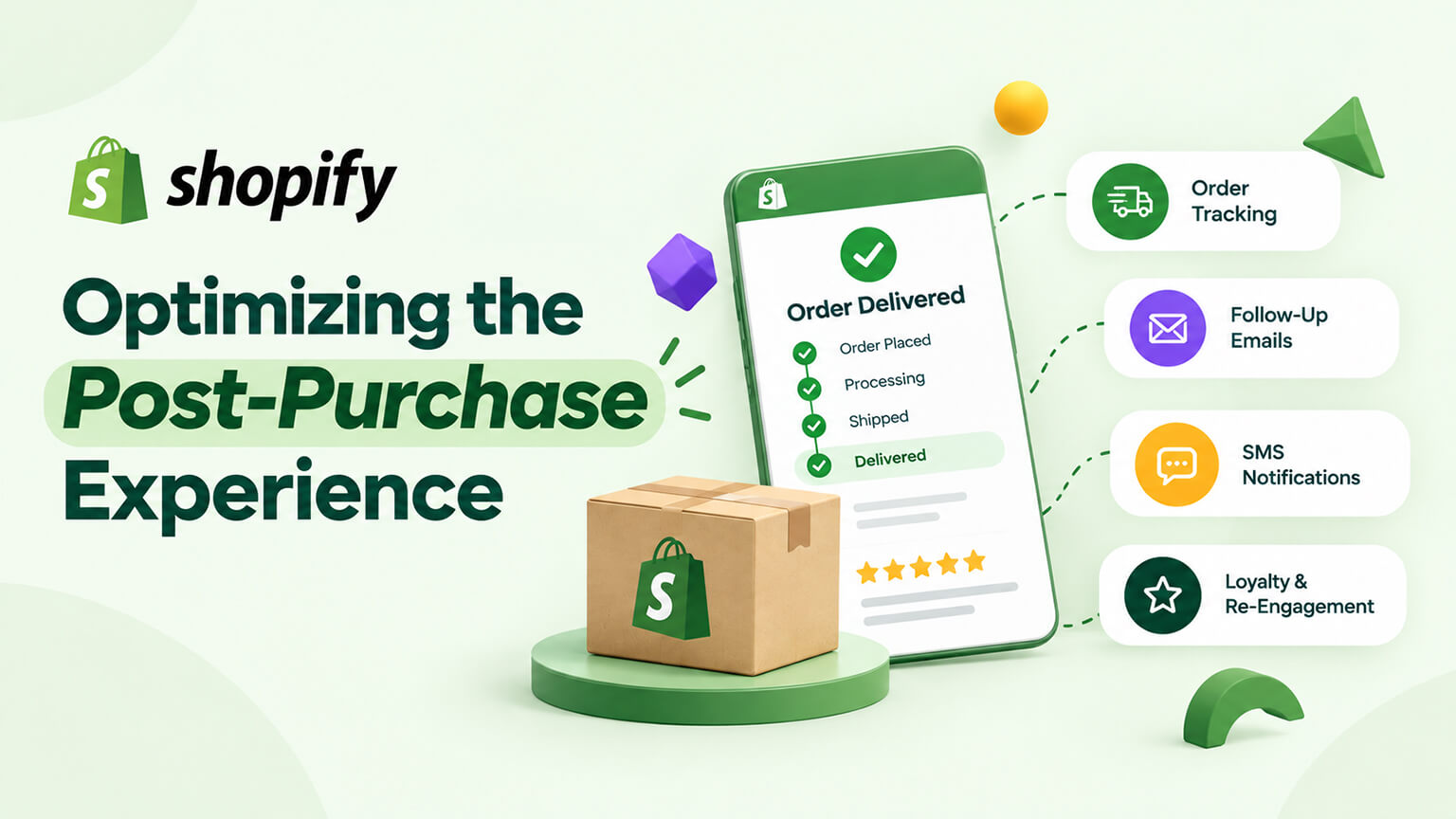
Most optimisation attention goes to getting the sale — the product page, cart, and checkout (as those discussions cover). But what happens after the customer buys — the post-purchase experience — matters a great deal too, and it’s often neglected. The post-purchase experience (order confirmation, communication, fulfillment and delivery, unboxing, follow-up, support, returns, as the retention and returns discussions cover) shapes customer satisfaction, whether they leave a good review, whether they return to buy again, and whether they recommend you — so it strongly affects retention, reviews, and lifetime value (as the retention and reviews discussions cover), which are where much ecommerce profit is. A good post-purchase experience turns a one-time buyer into a satisfied, repeat, advocating customer; a poor one (bad delivery, no communication, poor support, painful returns) creates dissatisfaction, bad reviews, and lost repeat business. So optimising the post-purchase experience is a high-value but under-appreciated opportunity. This piece covers optimising the post-purchase experience: why it matters, its components, how to optimise each, and how it connects to retention. (This connects to the retention, reviews, and returns discussions; this focuses on the post-purchase experience.)
This piece covers why the post-purchase experience matters, its components, how to optimise them, and how it connects to retention and lifetime value. Because the post-purchase experience strongly affects satisfaction, retention, reviews, and repeat business, and optimising it is a high-value opportunity. Let me walk through it.
Why the post-purchase experience matters
The post-purchase experience matters because it shapes what happens after the sale — satisfaction, retention, reviews, and advocacy. Shapes satisfaction — the post-purchase experience (getting the order, the communication, delivery, the product, support) shapes whether the customer is satisfied with their purchase and your brand (a good experience satisfies, a poor one disappoints), so it’s a major driver of customer satisfaction — the foundation (satisfaction shaped post-purchase). Affects retention and repeat business — a satisfied post-purchase experience makes customers more likely to return and buy again (retention, as the retention discussion covers), while a poor one loses them (dissatisfied customers don’t return) — so the post-purchase experience strongly affects retention and repeat business, where much profit is (as the retention discussion covers). Affects reviews — the post-purchase experience shapes reviews: satisfied customers (good experience) leave good reviews, dissatisfied ones (poor experience) leave bad reviews (as the reviews discussion covers) — so it affects your reviews and social proof (which affect conversion, as the social-proof discussion covers), a compounding effect. Affects advocacy and word-of-mouth — satisfied customers recommend you (word-of-mouth, referrals), while dissatisfied ones don’t (or warn others) — so the post-purchase experience affects advocacy (a valuable, low-cost acquisition source). Affects returns — the post-purchase experience (including expectations set and the product delivered, as the returns discussion covers) affects returns (a poor experience or unmet expectations drive returns), so it connects to returns (a cost). It’s often neglected — most attention goes to getting the sale (product page, checkout), and the post-purchase experience is often neglected (after the sale, attention drops), so it’s an under-optimised, high-value opportunity — the opportunity (neglected but impactful). And it’s where retention/LTV is built — since retention and lifetime value are where much ecommerce profit is (as the retention discussion covers), and the post-purchase experience strongly affects them, optimising it is high-value (building the retention/LTV that drives profit) — the value. So the post-purchase experience matters because it shapes satisfaction (the foundation), affects retention and repeat business (where much profit is), affects reviews (and thus social proof and conversion), affects advocacy and word-of-mouth, affects returns, is often neglected (an under-optimised opportunity), and is where retention/LTV is built — making optimising it a high-value, under-appreciated opportunity. So the post-purchase experience is high-value (shaping satisfaction, retention, reviews, advocacy) yet often neglected — worth optimising. So optimise the post-purchase experience for its impact on satisfaction, retention, reviews, and profit. The next section covers its components. So the post-purchase experience matters greatly for satisfaction, retention, reviews, and advocacy, yet is often neglected.
The components of the post-purchase experience
The post-purchase experience has several components, each an opportunity to optimise. Order confirmation — the order confirmation (the immediate confirmation the order was received — the thank-you page and confirmation email/SMS), reassuring the customer their order went through (as the checkout and Klaviyo discussions cover) — the first post-purchase touchpoint. Order communication and updates — communication and updates after the order (order processing, shipping confirmation, tracking, delivery updates, as the Klaviyo and inventory discussions cover), keeping the customer informed (versus wondering where their order is), an important satisfaction factor — post-order communication. Fulfillment and delivery — the fulfillment and delivery (accurate, timely fulfillment, reliable delivery, as the inventory/order and 3PL discussions cover), since getting the right product delivered well (on time, in good condition) is central to satisfaction (a delivery failure disappoints) — the core operational post-purchase experience. The product and unboxing — the product itself (meeting expectations, quality, as the returns discussion covers) and the unboxing experience (packaging, presentation), shaping the moment of receiving the product (a good product and unboxing delight, a poor one disappoints) — the product-receipt experience. Post-purchase follow-up — follow-up after delivery (post-purchase emails/SMS — checking satisfaction, asking for reviews, offering support, providing value, as the Klaviyo and reviews discussions cover), continuing the relationship (as the retention discussion covers) — post-delivery follow-up. Support — post-purchase support (helping with questions, issues, problems after purchase, as the helpdesk discussion covers), since good support when needed (post-purchase) shapes satisfaction (a poor support experience disappoints) — post-purchase support. Returns and issues handling — handling returns and issues (an easy, good returns process, resolving problems well, as the returns discussion covers), since how you handle returns and issues strongly affects satisfaction (a painful returns experience disappoints, a good one reassures) — returns/issue handling. And the ongoing relationship — the ongoing relationship after the purchase (continued communication, value, re-engagement, as the retention and Klaviyo discussions cover), building toward repeat business (retention) — the ongoing post-purchase relationship. So the components of the post-purchase experience are order confirmation (immediate reassurance), order communication and updates (keeping informed), fulfillment and delivery (the core operational experience), the product and unboxing (product receipt), post-purchase follow-up (continuing the relationship), support (post-purchase help), returns and issue handling (strongly affecting satisfaction), and the ongoing relationship (toward repeat business) — each a touchpoint and opportunity. So the post-purchase experience spans these components (confirmation, communication, delivery, product, follow-up, support, returns, relationship), each worth optimising. The next section covers optimising them. So the post-purchase experience components (confirmation, communication, delivery, product/unboxing, follow-up, support, returns, relationship) are each opportunities to optimise.
How to optimise the post-purchase experience
Optimising the post-purchase experience means improving each component to satisfy customers and build retention. Optimise order confirmation — make the order confirmation clear and reassuring (a good thank-you page and confirmation, as the checkout and Klaviyo discussions cover), and use the post-purchase moment (e.g., a tasteful post-purchase offer on the thank-you page, as the upsell discussion covers) — a clear, reassuring, opportunity-using confirmation. Communicate proactively — communicate proactively after the order (order and shipping confirmations, tracking, delivery updates, as the Klaviyo discussion covers), keeping the customer informed (reducing “where’s my order” anxiety and support contacts), a big satisfaction factor — proactive communication. Ensure good fulfillment and delivery — ensure accurate, timely fulfillment and reliable delivery (as the inventory/order and 3PL discussions cover), since getting the product delivered well is central to satisfaction (fix fulfillment/delivery problems) — reliable fulfillment and delivery. Deliver a good product and unboxing — ensure the product meets expectations (accurate expectations set, quality product, as the returns and product-page discussions cover) and consider the unboxing experience (packaging, presentation, a nice touch), delighting at product receipt — good product and unboxing. Follow up well — follow up after delivery (post-purchase emails/SMS checking satisfaction, asking for reviews, offering support and value, re-engaging, as the Klaviyo, reviews, and retention discussions cover), continuing the relationship and generating reviews — good follow-up (a key retention/reviews touchpoint). Provide good support — provide good post-purchase support (responsive, helpful support for questions and issues, as the helpdesk discussion covers), satisfying customers when they need help — good support. Make returns and issues easy — make returns easy and handle issues well (a good, easy returns process, resolving problems well, as the returns discussion covers), since good returns/issue handling reassures and satisfies (versus a painful process disappointing) — easy returns and good issue resolution. Build the ongoing relationship — build the ongoing relationship (continued relevant communication, value, re-engagement, loyalty, as the retention and Klaviyo discussions cover), turning the customer into a repeat, loyal customer — the retention-building relationship. Leverage email/SMS for the experience — leverage your email/SMS platform (as the integration and Klaviyo discussions cover) for the post-purchase communication, follow-up, review requests, and relationship-building (much of the post-purchase experience is email/SMS-powered) — using email/SMS for the post-purchase experience. And treat it as important — treat the post-purchase experience as important (not neglected), optimising it as you would the pre-purchase experience, since it strongly affects satisfaction, retention, and reviews — giving it attention. So optimise the post-purchase experience by optimising order confirmation (clear, reassuring, opportunity-using), communicating proactively (updates, tracking), ensuring good fulfillment and delivery, delivering a good product and unboxing, following up well (satisfaction, reviews, value, re-engagement), providing good support, making returns and issues easy, building the ongoing relationship, leveraging email/SMS for the experience, and treating it as important. The keys are proactive communication, reliable fulfillment/delivery, good follow-up (satisfaction, reviews, relationship), easy returns/support, and building the ongoing relationship — optimising the whole post-purchase experience for satisfaction and retention. So optimise the components (communication, delivery, product, follow-up, support, returns, relationship) to satisfy customers and build retention. The next section covers the retention connection. So optimise the post-purchase experience across its components (communication, delivery, product, follow-up, support, returns, relationship) for satisfaction and retention.
How it connects to retention and lifetime value
The post-purchase experience connects directly to retention and lifetime value — where much ecommerce profit is (as the retention discussion covers). It shapes whether customers return — the post-purchase experience shapes whether customers are satisfied enough to return and buy again (as the retention discussion covers): a good post-purchase experience (good delivery, communication, support, follow-up, relationship) satisfies and retains, while a poor one loses them — so it directly drives retention (satisfied post-purchase customers return). It builds the relationship — the post-purchase experience (follow-up, ongoing communication, value, as the retention and Klaviyo discussions cover) builds the customer relationship that drives repeat business (retention, as that discussion covers), so it’s where the retention relationship is built (post-purchase) — building retention. It affects lifetime value — since retention drives lifetime value (repeat purchases over time, as the retention discussion covers), and the post-purchase experience drives retention, it affects LTV (a good post-purchase experience, retaining customers, grows LTV) — so it affects the LTV where much profit is. It generates reviews and advocacy — the post-purchase experience generates reviews (satisfied customers reviewing, as the reviews discussion covers) and advocacy (recommending), which support acquisition and conversion (social proof, word-of-mouth) — compounding benefits beyond retention. It’s part of the retention strategy — optimising the post-purchase experience is part of a retention strategy (as the retention discussion covers — the post-purchase experience, follow-up, relationship, and support that retain customers), so it’s integral to retention/LTV efforts — a retention lever. Retention is where profit is — since retention and LTV are where much ecommerce profit is (repeat customers being far more profitable than one-time buyers, as the retention discussion covers), and the post-purchase experience drives retention, optimising it is high-value (driving the profitable retention) — the profit connection. It compounds — a good post-purchase experience compounds (satisfied customers returning, reviewing, recommending, building LTV and social proof over time, as the retention and reviews discussions cover), so its value compounds — compounding value. And it’s under-appreciated — because the post-purchase experience is often neglected (attention on getting the sale), optimising it is an under-appreciated, high-value retention/LTV opportunity (as the retention discussion covers) — the opportunity. So the post-purchase experience connects directly to retention and lifetime value: it shapes whether customers return (retention), builds the retention relationship, affects LTV (via retention), generates reviews and advocacy (compounding benefits), is part of the retention strategy, and — since retention/LTV are where much profit is — is a high-value, compounding, under-appreciated opportunity. So optimising the post-purchase experience is a key part of building retention and lifetime value (where much ecommerce profit is), making it high-value. So the post-purchase experience is where much retention and LTV is built, connecting it directly to ecommerce profit. So optimising the post-purchase experience drives retention and lifetime value — where much ecommerce profit is.
The bottom line
Most optimisation attention goes to getting the sale (the product page, cart, and checkout), but what happens after the customer buys — the post-purchase experience — matters a great deal too, and it’s often neglected. The post-purchase experience (order confirmation, communication and updates, fulfillment and delivery, the product and unboxing, follow-up, support, returns, and the ongoing relationship) shapes customer satisfaction, whether they leave a good review, whether they return to buy again, and whether they recommend you — so it strongly affects retention, reviews, and lifetime value, which are where much ecommerce profit is. A good post-purchase experience turns a one-time buyer into a satisfied, repeat, advocating customer; a poor one (bad delivery, no communication, poor support, painful returns) creates dissatisfaction, bad reviews, and lost repeat business — making optimising it a high-value but under-appreciated opportunity. Its components — order confirmation (immediate reassurance), order communication and updates (keeping the customer informed), fulfillment and delivery (the core operational experience), the product and unboxing (product receipt), post-purchase follow-up (continuing the relationship), support (post-purchase help), returns and issue handling (strongly affecting satisfaction), and the ongoing relationship (toward repeat business) — are each opportunities to optimise. Optimise them by making the order confirmation clear and reassuring (and using the post-purchase moment tastefully), communicating proactively (order and shipping confirmations, tracking, delivery updates — reducing anxiety and support contacts), ensuring accurate, timely fulfillment and reliable delivery (central to satisfaction), delivering a product that meets expectations plus a good unboxing, following up well after delivery (checking satisfaction, asking for reviews, offering value, re-engaging — a key retention and reviews touchpoint), providing responsive, helpful support, making returns easy and handling issues well (which strongly reassures and satisfies), building the ongoing relationship (continued relevant communication, value, re-engagement, loyalty), leveraging your email/SMS platform for much of this (communication, follow-up, review requests, relationship-building), and treating the post-purchase experience as important rather than neglected. Crucially, the post-purchase experience connects directly to retention and lifetime value — where much ecommerce profit is: it shapes whether customers are satisfied enough to return (retention), builds the retention relationship, affects LTV (via retention), generates reviews and advocacy (compounding benefits for conversion and acquisition), is integral to a retention strategy, and compounds over time — so optimising it is a high-value, under-appreciated retention/LTV opportunity. The keys are proactive communication, reliable fulfillment and delivery, good follow-up (satisfaction, reviews, relationship), easy returns and good support, and building the ongoing relationship — optimising the whole post-purchase experience for satisfaction and retention. So don’t neglect the post-purchase experience in favour of only getting the sale: optimise it across its components (confirmation, communication, delivery, product, follow-up, support, returns, relationship) — because it strongly shapes satisfaction, reviews, advocacy, and, above all, the retention and lifetime value where much ecommerce profit is. Optimising the post-purchase experience turns one-time buyers into satisfied, repeat, advocating customers, which is one of the highest-value, most under-appreciated opportunities in ecommerce.
Frequently asked questions
Why does the post-purchase experience matter?
Because it shapes what happens after the sale — customer satisfaction, reviews, retention, and advocacy — which strongly affect where much ecommerce profit lies. The post-purchase experience (order confirmation, communication and updates, fulfillment and delivery, the product and unboxing, follow-up, support, returns) determines whether a customer is satisfied with their purchase and your brand. A satisfied customer is more likely to return and buy again (retention), leave a good review (social proof that helps conversion), and recommend you (word-of-mouth, a low-cost acquisition source), while a dissatisfied one (from poor delivery, no communication, bad support, or a painful returns process) doesn’t return, may leave a bad review, and won’t recommend you. Since retention and lifetime value are where much ecommerce profit is (repeat customers being far more profitable than one-time buyers), and the post-purchase experience strongly drives them, it’s a high-value factor. Yet it’s often neglected — most attention goes to getting the sale — which makes optimising the post-purchase experience an under-appreciated, high-value opportunity.
What are the components of the post-purchase experience?
Several touchpoints, each an opportunity to optimise. The order confirmation (the immediate reassurance the order went through — the thank-you page and confirmation email or SMS). Order communication and updates (processing, shipping confirmation, tracking, and delivery updates that keep the customer informed). Fulfillment and delivery (accurate, timely fulfillment and reliable delivery — the core operational experience, since getting the right product delivered well is central to satisfaction). The product and unboxing (the product meeting expectations, plus the packaging and presentation experience of receiving it). Post-purchase follow-up (emails or SMS checking satisfaction, asking for reviews, offering support and value, and re-engaging). Support (responsive, helpful help for questions and issues after purchase). Returns and issue handling (an easy returns process and good resolution of problems, which strongly affects satisfaction). And the ongoing relationship (continued relevant communication, value, and re-engagement that builds toward repeat business). Together these make up the post-purchase experience, and each is worth optimising because each shapes satisfaction, retention, and reviews.
How do I optimise the post-purchase experience?
Improve each component to satisfy customers and build retention. Make the order confirmation clear and reassuring (and use the post-purchase moment tastefully, such as a relevant post-purchase offer). Communicate proactively — order and shipping confirmations, tracking, and delivery updates — to keep the customer informed and reduce anxiety and “where’s my order” support contacts. Ensure accurate, timely fulfillment and reliable delivery, since getting the product delivered well is central to satisfaction. Deliver a product that meets the expectations you set, plus a good unboxing experience. Follow up after delivery (checking satisfaction, asking for reviews, offering value, re-engaging), which is a key touchpoint for retention and reviews. Provide responsive, helpful post-purchase support, and make returns easy and handle issues well (which strongly reassures and satisfies customers). Build the ongoing relationship with continued relevant communication and value that drives repeat business. Leverage your email/SMS platform for much of this (communication, follow-up, review requests, relationship-building). And treat the post-purchase experience as important — giving it the attention you’d give the pre-purchase experience — rather than neglecting it once the sale is made.
How does the post-purchase experience affect retention and profit?
Directly and significantly. The post-purchase experience shapes whether customers are satisfied enough to return and buy again — a good experience (reliable delivery, proactive communication, good support, thoughtful follow-up, an ongoing relationship) satisfies and retains customers, while a poor one loses them. Since retention drives lifetime value (repeat purchases over time), and repeat customers are far more profitable than one-time buyers (the acquisition cost is already paid, and repeat purchases are cheaper to generate), the post-purchase experience directly affects the retention and lifetime value where much ecommerce profit lies. It’s also where the retention relationship is built — the follow-up, ongoing communication, and value that turn a buyer into a loyal, repeat customer happen post-purchase. Beyond retention, it generates reviews (satisfied customers reviewing) and advocacy (recommendations), which compound into social proof and word-of-mouth that help conversion and acquisition. So optimising the post-purchase experience is integral to a retention strategy and a high-value, compounding, under-appreciated opportunity — because it’s largely where the profitable retention and lifetime value of ecommerce are built.