
Connecting Shopify to a 3PL: Order and Inventory Sync
On this page
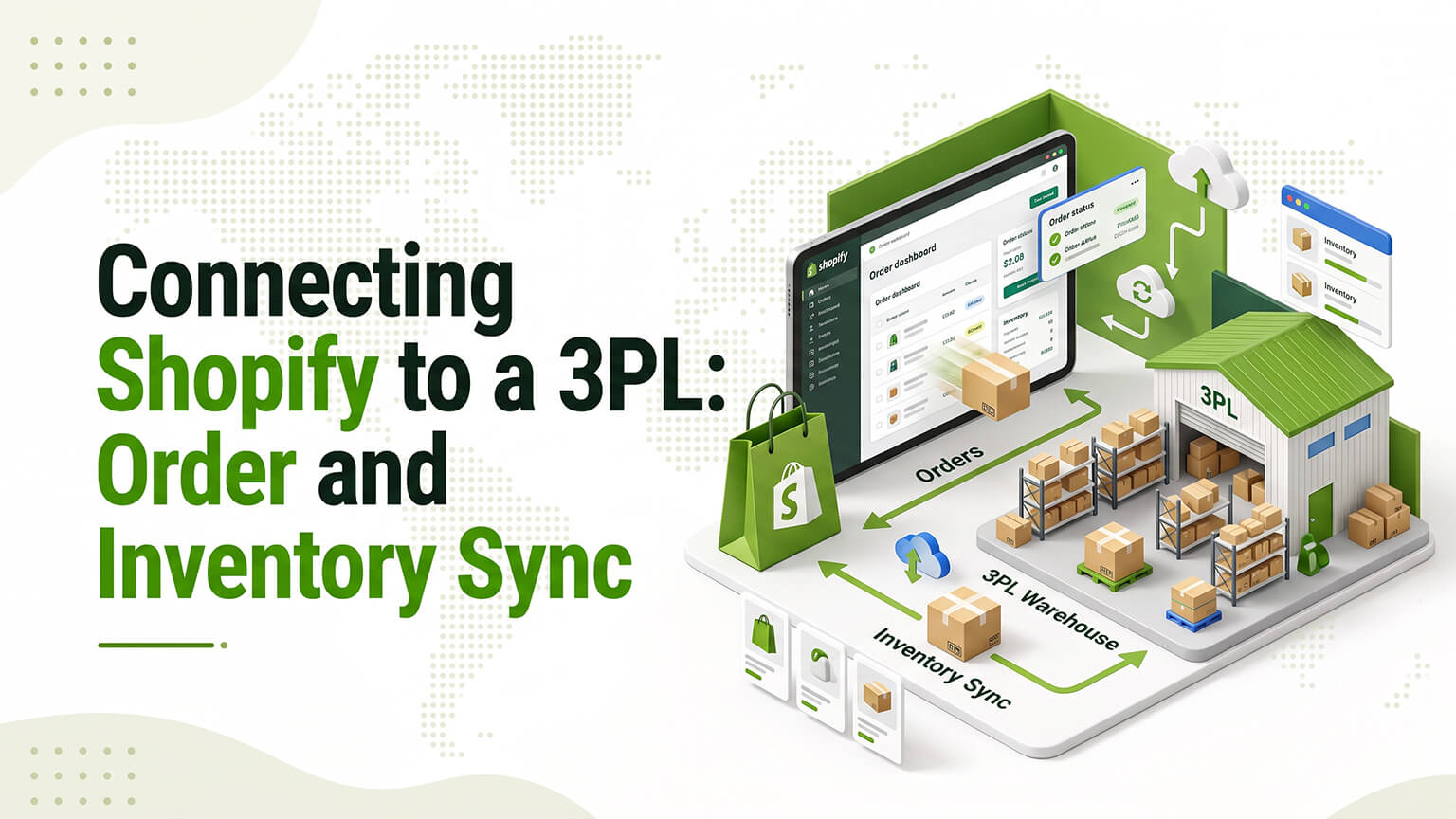
As a store grows, fulfillment — the warehousing, picking, packing, and shipping of orders — becomes a significant operational challenge, and many brands turn to a third-party logistics provider, or 3PL, to handle it. You send your inventory to the 3PL, and they store it and fulfill your orders, letting you scale fulfillment without doing it all yourself. But using a 3PL introduces a critical technical requirement: connecting it to Shopify, so orders flow to the 3PL for fulfillment, inventory stays in sync, and fulfillment and tracking information flows back. This integration is the link that makes the 3PL arrangement work, and when it’s unreliable, the consequences — unfulfilled orders, inaccurate inventory and overselling, bad customer experiences — are serious.
This piece covers what a 3PL is and why brands use one, what the Shopify-3PL integration needs to do, why reliability matters so much, and how to get it right (including that the integration quality should factor into choosing a 3PL). It’s related to the ERP integration discussion — the same reliability principles apply to any critical integration — but the 3PL integration has its own specifics around orders, inventory, and fulfillment that are worth understanding. Let me walk through it.
What a 3PL is and why brands use one
A 3PL (third-party logistics provider) is a company that handles fulfillment for you — warehousing your inventory and picking, packing, and shipping your orders. Instead of storing inventory and fulfilling orders yourself (in your own space, with your own labor), you send your inventory to the 3PL, and they store it and fulfill your orders as they come in. This lets you outsource the operationally-demanding fulfillment function to a specialist.
Brands use a 3PL for several reasons: to scale fulfillment without building and running their own warehousing and fulfillment operation (which is demanding and capital-intensive), to focus on their core business (product, marketing, growth) rather than logistics, to get faster and often cheaper shipping at scale (3PLs have the infrastructure, locations, and shipping rates that come with volume), and to handle fulfillment complexity (multiple locations, returns, etc.) professionally. So a 3PL is the outsourced fulfillment solution that lets a growing brand scale its order fulfillment without doing it in-house — a common and sensible move as fulfillment volume grows beyond what self-fulfillment handles well. Understanding what a 3PL does (outsourced warehousing and fulfillment) and why brands use one (scaling fulfillment, focusing on the business, better shipping at scale) frames why the Shopify-3PL integration matters: it’s the link connecting your store to your outsourced fulfillment, which has to work reliably for the arrangement to function.
What the integration needs to do
The Shopify-3PL integration has to keep your store and your fulfillment provider in sync, which involves several flows of information. Orders flow to the 3PL: when an order is placed on Shopify, it needs to reach the 3PL so they can fulfill it — this is the core flow, getting orders to the fulfillment provider promptly and accurately. Inventory syncs back from the 3PL: the 3PL holds your stock, so Shopify needs to reflect the 3PL’s inventory accurately (as stock is fulfilled or received), so your store shows correct availability and doesn’t oversell or hide stock. Fulfillment status and tracking flow back: when the 3PL ships an order, the fulfillment status and tracking information need to flow back to Shopify (and the customer), so orders are marked fulfilled and customers get tracking. And returns may need handling in the sync too.
So the integration manages these flows — orders to the 3PL, inventory back to Shopify, fulfillment and tracking back to Shopify, returns — keeping the store and the fulfillment provider in sync. Each flow matters: orders must reach the 3PL (or they don’t get fulfilled), inventory must sync accurately (or you oversell or hide stock), fulfillment and tracking must flow back (or orders aren’t marked fulfilled and customers don’t get tracking). The integration is the connective tissue making the 3PL arrangement function — your store and your outsourced fulfillment working together through these synced flows. Understanding what the integration needs to do (sync orders, inventory, fulfillment, tracking, returns between Shopify and the 3PL) shows why it’s critical: it’s the link that makes outsourced fulfillment work, and each flow it manages is essential to orders getting fulfilled and inventory staying accurate.
Why reliability matters so much
As with any critical integration (echoing the ERP discussion), reliability is paramount, because the consequences of the 3PL integration failing are serious and customer-facing. If orders don’t reliably reach the 3PL, orders go unfulfilled (a serious failure — the customer paid and the order isn’t shipped). If inventory doesn’t sync accurately, you oversell (selling stock you don’t have, leading to cancellations and angry customers) or hide stock (showing unavailable when you have it, losing sales). If fulfillment and tracking don’t flow back, orders aren’t marked fulfilled and customers don’t get tracking (a poor experience and operational confusion). These aren’t minor glitches — they’re unfulfilled orders, overselling, and bad customer experiences, which directly damage your business and reputation.
So the 3PL integration must be reliable, handling the real-world conditions that break naive integrations — temporary outages, API rate limits, data issues, concurrent updates — gracefully, with the reliability mechanisms covered in the ERP context: queueing, retries, error handling, and monitoring, so that flows don’t silently fail and problems surface immediately. An integration that loses orders or corrupts inventory because it doesn’t handle failures gracefully is worse than no integration; the whole point is reliable sync, and reliability under real conditions is what makes it trustworthy. Inventory accuracy especially is critical — overselling and stockouts from inventory sync failures directly cost sales and anger customers — so the inventory sync must be reliable and accurate. So reliability is paramount for the 3PL integration: it must reliably get orders to the 3PL, keep inventory accurate, and flow fulfillment back, handling real-world failures gracefully, because the consequences of failure (unfulfilled orders, overselling, bad experiences) are serious and customer-facing. As with any critical integration, build for reliability (queueing, retries, monitoring), because a fulfillment integration that silently fails causes real damage.
Integration options and choosing a 3PL
Practically, how does the integration happen? Many 3PLs offer Shopify integrations — apps or built-in connectors that handle the sync — which can make connecting reasonably straightforward if the 3PL’s integration is good. Some situations need custom integration or middleware (for unusual requirements, multiple systems, or where the off-the-shelf integration falls short), as with any integration. So the integration might be via the 3PL’s own Shopify app/connector (if good), or custom work for more complex or demanding needs.
Critically, the quality of a 3PL’s Shopify integration should factor into choosing a 3PL. Since the integration is essential to the arrangement working, a 3PL with a good, reliable Shopify integration is preferable to one with a poor or unreliable integration, even if other factors are similar — because a poor integration means the order, inventory, and fulfillment sync problems that damage your business. So when choosing a 3PL, evaluate their Shopify integration (does it reliably handle orders, inventory, fulfillment, tracking?) as part of the decision, not just their fulfillment service and rates. A great 3PL with a poor Shopify integration will cause sync problems; a 3PL with a solid, reliable integration makes the arrangement work smoothly. This is an underappreciated factor in 3PL selection — the integration quality matters as much as the fulfillment quality, because a fulfillment provider you can’t reliably sync with causes order and inventory problems regardless of how well they fulfill. So factor the Shopify integration quality into choosing a 3PL, and where the integration needs to be custom or enhanced, treat it as the critical, reliability-demanding work it is. The integration is part of what you’re choosing when you choose a 3PL.
The operational and multi-location dimensions
A couple of additional considerations. Operationally, the 3PL integration is part of your broader operations — it connects to how you manage inventory, orders, and fulfillment, and may interact with other systems (your ERP, if you have one, as the ERP discussion covers). So the 3PL integration doesn’t exist in isolation; it’s part of your operational systems, and for brands with an ERP and a 3PL, these may need to work together (inventory and orders flowing appropriately among Shopify, ERP, and 3PL), which adds complexity worth handling deliberately. Multi-location and multi-3PL setups add further complexity — brands fulfilling from multiple locations or using multiple 3PLs need inventory and orders managed and synced across them, which is more demanding than a single-3PL setup and needs careful handling to keep inventory accurate and orders routed correctly.
So consider the operational context — how the 3PL integration fits with your other systems (ERP) and whether you have multi-location/multi-3PL complexity — as part of getting the integration right. For a single 3PL, the integration is the Shopify-3PL sync; for more complex setups (3PL plus ERP, or multiple locations/3PLs), the integration is part of a broader operational sync that needs careful, reliable handling across systems. The reliability and careful-handling themes apply more, not less, as the complexity grows. So account for your operational context and complexity in the 3PL integration — it’s part of your operational systems, and complex setups (ERP, multi-location, multi-3PL) need the integration handled as part of a broader, carefully-managed operational sync, with reliability paramount throughout given the customer-facing consequences of fulfillment and inventory failures.
A worked example: the inventory sync that oversold
To see why reliability and inventory accuracy matter so much, picture a brand on a 3PL whose inventory sync is unreliable. The 3PL holds the stock and fulfills orders, but the sync back to Shopify lags or fails intermittently, so Shopify’s inventory counts drift out of step with the actual stock at the 3PL. The result is overselling: Shopify shows products available that are actually out of stock at the 3PL, customers order them, and then the brand has to cancel orders it can’t fulfill — angry customers, refunds, damaged trust, and the operational mess of sorting it out. The unreliable inventory sync directly caused lost sales (cancellations), customer anger, and reputational damage, all from a sync that didn’t keep Shopify’s inventory accurate to the 3PL’s reality.
Now picture the same brand with a reliable inventory sync. The 3PL’s actual stock is accurately and promptly reflected in Shopify, so the store shows correct availability — no overselling (it doesn’t show out-of-stock items as available) and no hidden stock (it doesn’t show available items as out of stock). Orders the store accepts can be fulfilled, customers get what they ordered, and the inventory is trustworthy. The reliable sync prevented the overselling, cancellations, and customer anger that the unreliable one caused. Same 3PL arrangement; the difference was whether the inventory sync was reliable and accurate.
This captures why the 3PL integration’s reliability — inventory accuracy especially — matters so much: unreliable inventory sync causes overselling (or hidden stock), which directly costs sales and angers customers, while reliable sync keeps inventory trustworthy and the arrangement smooth. The overselling-from-bad-sync scenario is a common and damaging 3PL integration failure, and it’s exactly why the integration must be built for reliability and accuracy, not just functionality in a calm demo. Inventory you can’t trust (from unreliable sync) is worse than the manual inventory management the 3PL was supposed to improve on, so the integration’s reliability is essential to the 3PL arrangement actually being better than not having it. Get the inventory sync reliable and accurate, and the 3PL works as intended; leave it unreliable, and it causes the overselling and customer anger this scenario describes.
When to move to a 3PL
A note on timing, since the 3PL decision precedes the integration. The signal to move to a 3PL is generally when self-fulfillment is becoming a constraint or distraction — when handling warehousing and fulfillment yourself is consuming too much time, capital, or attention, or struggling to keep up with volume, or holding back your shipping speed and cost relative to what a 3PL could offer. Before that point — when self-fulfillment is manageable and not a meaningful constraint — the move to a 3PL (with its cost and the integration work) may not be warranted; you’re handling fulfillment fine. The move makes sense when fulfillment has grown demanding enough that outsourcing it to a specialist frees you to focus on the business and improves your fulfillment (speed, cost, scale).
So time the move to a 3PL to when self-fulfillment is becoming a constraint or distraction, not prematurely (when you’re handling it fine) and not too late (when fulfillment has been a major drag for ages). The brands that move at the right time do so when fulfillment has grown demanding enough that a 3PL clearly helps — freeing their attention, improving their fulfillment, and scaling beyond what self-fulfillment handled. Watch for the signs (fulfillment consuming too much time/capital/attention, struggling with volume, wanting better shipping at scale), and when they’re clearly present, move to a 3PL — and then handle the Shopify integration as the critical piece it is. Timing the move to your genuine outgrowing of self-fulfillment ensures the 3PL (and its integration work and cost) is worth it: you’re outsourcing fulfillment because it’s become a real constraint, gaining the scale, focus, and shipping improvement a 3PL offers just as you need them.
The bottom line
As a store grows, many brands use a 3PL (third-party logistics provider) to handle fulfillment — outsourcing warehousing, picking, packing, and shipping to a specialist so they can scale fulfillment, focus on the business, and get better shipping at scale. Using a 3PL requires connecting it to Shopify, and this integration is critical: it must sync orders to the 3PL (so they get fulfilled), inventory back to Shopify (so availability is accurate and you don’t oversell or hide stock), and fulfillment status and tracking back (so orders are marked fulfilled and customers get tracking), plus returns. Reliability is paramount, because the consequences of failure are serious and customer-facing — unfulfilled orders, overselling, and bad experiences — so the integration must handle real-world conditions (outages, rate limits, data issues) gracefully with queueing, retries, error handling, and monitoring, with inventory accuracy especially critical. The integration may come via the 3PL’s own Shopify app/connector (if good) or custom work for complex needs, and crucially, the quality of a 3PL’s Shopify integration should factor into choosing a 3PL — a great fulfillment provider with a poor integration causes sync problems, so evaluate the integration as part of the 3PL decision, not just the fulfillment service. Account for your operational context (how the 3PL integration fits with an ERP and other systems) and any multi-location/multi-3PL complexity, handling the integration as part of a broader, reliably-managed operational sync. Get the 3PL integration right — reliable, accurate, well-chosen — and your outsourced fulfillment works smoothly; get it wrong, and the order and inventory failures damage your business and customers, which is why this critical integration deserves the reliability and care it requires. The 3PL frees you from running fulfillment yourself, but only if the integration reliably connects your store to that outsourced fulfillment — so treat the Shopify-3PL integration as the essential, reliability-demanding link it is, choose a 3PL with a solid integration, build or enhance it for reliability where needed, and keep inventory accurate above all. Done well, the 3PL arrangement scales your fulfillment smoothly; done with a shaky integration, it introduces order and inventory problems worse than the self-fulfillment it replaced.
Frequently asked questions
What is a 3PL and why connect it to Shopify?
A 3PL (third-party logistics provider) handles fulfillment for you — warehousing your inventory and picking, packing, and shipping your orders — so you can scale fulfillment without doing it in-house. You connect it to Shopify so the arrangement works: orders flow to the 3PL for fulfillment, inventory syncs back to Shopify (for accurate availability), and fulfillment status and tracking flow back to Shopify and your customers. The integration is the essential link making outsourced fulfillment function with your store.
What does the Shopify-3PL integration need to sync?
Several flows: orders to the 3PL (so they get fulfilled), inventory back from the 3PL to Shopify (so your store shows accurate availability and doesn’t oversell or hide stock), fulfillment status and tracking back to Shopify and customers (so orders are marked shipped and customers get tracking), and returns. Each flow is essential — orders must reach the 3PL, inventory must stay accurate, and fulfillment/tracking must flow back — so the integration keeps your store and fulfillment provider properly in sync.
Why is reliability so important for a 3PL integration?
Because the consequences of failure are serious and customer-facing. If orders don’t reliably reach the 3PL, they go unfulfilled (the customer paid but nothing ships). If inventory doesn’t sync accurately, you oversell (cancellations, angry customers) or hide stock (lost sales). If fulfillment and tracking don’t flow back, orders aren’t marked fulfilled and customers don’t get tracking. So the integration must handle real-world conditions (outages, rate limits, data issues) gracefully with queueing, retries, and monitoring — inventory accuracy especially — because a fulfillment integration that silently fails causes real damage.
Does the 3PL’s Shopify integration matter when choosing a 3PL?
Yes, more than people realize. Since the integration is essential to the arrangement working, a 3PL with a good, reliable Shopify integration is preferable to one with a poor integration, even if other factors are similar — because a poor integration causes the order, inventory, and fulfillment sync problems that damage your business. So evaluate a 3PL’s Shopify integration quality (does it reliably handle orders, inventory, fulfillment, tracking?) as part of the decision, not just their fulfillment service and rates. A great fulfillment provider you can’t reliably sync with still causes order and inventory problems.