
Best Shopify Bundle Apps
On this page
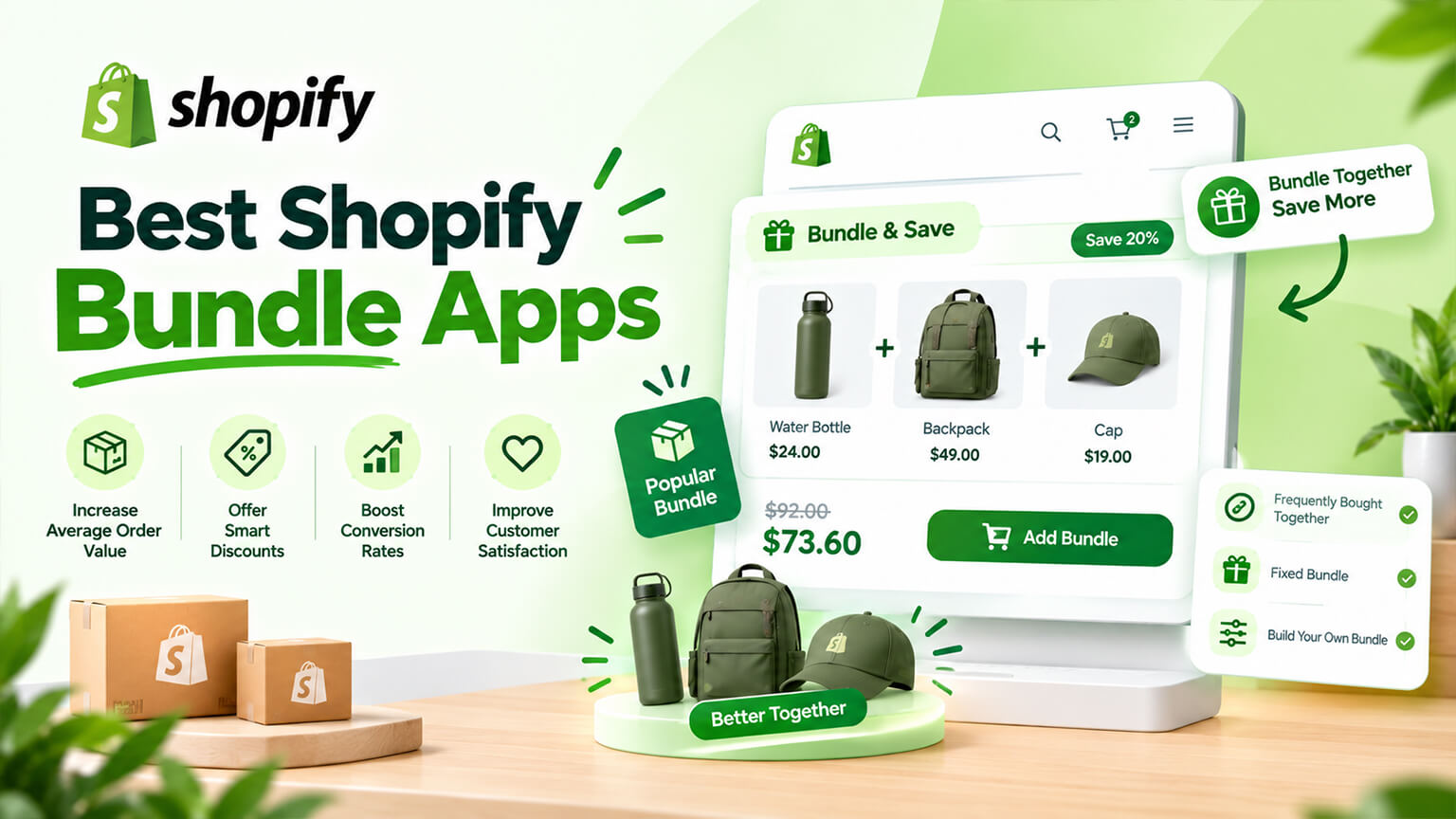
Bundling is my favourite way to increase average order value, because it is almost the only one that customers actively appreciate. An upsell asks someone to spend more. A bundle answers a question they already had — “what else do I need with this?” — and rewards them for buying the complete answer.
Done well it lifts AOV, improves the customer experience, moves slow stock alongside fast, and increases the chance someone tries a product they would not have bought alone. Done carelessly it creates inventory problems that are painful to unpick.
The inventory question is the one that separates these apps, and it is the one most comparisons skip. Let me start there.
The inventory problem nobody mentions
When you sell a bundle of three products, what happens to your stock?
There are two fundamentally different approaches, and choosing the wrong one for your operation causes lasting problems.
Component-based bundles keep the bundle as a virtual construct. When someone buys it, the app decrements stock on each individual component. Your inventory stays accurate, you do not hold separate bundle stock, and you can offer many bundle combinations without duplicating anything. This is usually what you want — but it requires the app to handle inventory syncing reliably, and it complicates fulfilment because your warehouse receives an order for a bundle that must be picked as separate items.
Fixed-SKU bundles treat the bundle as its own product with its own stock number. Simple, predictable, and fulfilment-friendly — pickers see one SKU. The cost is that you must physically assemble and count bundle inventory separately, and stock of the bundle is disconnected from stock of the components, which means you can be sold out of a bundle while holding plenty of everything inside it.
Neither is wrong. Which suits you depends on whether you pre-assemble bundles physically or pick them at fulfilment, and on how many combinations you want to offer. Decide this before choosing an app, because apps differ in which model they handle well.
The other questions that matter
Discount handling. How the bundle discount is applied, whether it stacks with other promotions, and how it appears in the cart. Bundles that silently combine with a site-wide sale can destroy margin at exactly the moment you are least watching. Check the interaction rules explicitly.
Build-your-own-box support. If you want customers assembling their own selection from tiers or categories, that is a meaningfully different capability from fixed curated bundles. Many apps do one well and the other poorly.
Subscription compatibility. If you run subscriptions, can a bundle be subscribed to? This is a common requirement and a common gap. If it matters, test it properly with your subscription platform before committing, because retrofitting it later is awkward.
Storefront presentation. How the bundle appears on the product page and in the cart. Some apps produce something that looks native; others produce an obvious widget. Since bundles are a conversion mechanism, presentation matters more than usual.
Reporting. Can you see what bundles sell, what the discount is costing, and whether bundled orders are more profitable than unbundled ones? Without this you are guessing at the economics.
Page weight. A bundle builder on your product page adds scripts. Measure it, particularly for build-your-own-box interfaces, which tend to be heavier.
Where the main options sit
Verify specifics before publishing.
Shopify’s native bundles capability deserves consideration first. Shopify has been extending native support for bundles through its own tooling, and native means no third-party layer, no extra subscription, and inventory handled by the platform. For straightforward fixed bundles this is increasingly the sensible default and it is worth checking what is currently available before paying for anything.
Fixed-bundle and volume-discount apps cover the common cases — buy-this-with-that, quantity breaks, curated sets — competently and cheaply. Plenty of solid options exist in this space.
Build-your-own-box specialists handle the more complex interaction of letting customers assemble a selection, often with tiered pricing and category rules. These are a distinct category and worth evaluating separately from simple bundling.
Broader merchandising suites such as Rebuy fold bundling into a wider recommendation and upsell offering, which suits stores wanting one tool across several AOV mechanics.
The practical advice is to identify which bundle model you need — fixed, mix-and-match, or build-your-own — before comparing, because that narrows the field faster than any feature grid.
Bundles that actually work
The app is the easy part. These are the decisions that determine whether bundling earns anything.
Bundle things that belong together. The coffee, the filters, and the grinder. The cleanser, serum, and moisturiser. A bundle that answers “what do I need to get started?” sells itself. Random products grouped for a discount is a clearance bin and shoppers can tell.
Make the saving visible and worthwhile. Show what the items cost separately and what the bundle costs. If the saving is trivial, the bundle is not a reason to buy more — it is a rounding error with extra steps.
Use bundles for onboarding. A starter set is often the best first purchase for a new customer, because it removes the “where do I begin?” problem that stops people buying anything at all.
Introduce slow stock alongside fast. A bundle pairing a bestseller with something that needs movement is legitimate merchandising, provided the pairing makes sense.
Keep the discount disciplined. Model the margin at the bundle price, including how it interacts with your other promotions. Bundles are easy to over-discount because the AOV number looks healthy while the profit does not.
Present them on the product page, not just a bundles collection. The moment a shopper is looking at the cleanser is the moment to offer the routine.
Watch revenue per visitor, not AOV. If bundling raises AOV but the discount erodes margin further, you have lost money while a dashboard congratulates you. This is standard CRO measurement discipline.
A worked example: the bundle that broke fulfilment
A skincare brand launched curated routine bundles and they sold well — AOV rose noticeably in the first month and everyone was pleased.
Two problems emerged by month three. First, their bundle app used fixed-SKU inventory, so they were pre-assembling boxes. That meant packing labour upfront, physical storage for assembled bundles, and stock trapped inside them — they ran out of a bundle while holding hundreds of each component, and could not sell what they had.
Second, the bundle discount was stacking with their newsletter welcome offer and a seasonal promotion. Some orders were going out at a margin nobody had approved.
The fix was switching to a component-based bundle approach, so bundles decremented individual product stock and were picked at fulfilment rather than pre-assembled, and configuring the discount rules so bundle pricing did not stack with other offers.
AOV stayed up, margin recovered, and the warehouse stopped assembling boxes. The lesson is that bundling is an operations decision as much as a merchandising one, and the app choice should follow from how you actually fulfil rather than from which has the nicest interface.
When to build custom
Most stores should use an app or Shopify’s native capability. Custom work earns its place in two situations.
The first is a unusual bundle model — complex configurators with compatibility rules, tiered build-your-own with intricate pricing logic, or bundles interacting with subscriptions in a way no app handles. That is custom app development territory and it can be worth it when bundling is central to how you sell.
The second is consolidation. If you are running a bundle app, an upsell app, and a volume-discount app that overlap, replacing them with one native implementation removes subscriptions, removes page weight, and gives you presentation that looks like your store rather than three different widgets.
The bundle types worth knowing
Different mechanics suit different catalogues, and apps vary in which they handle well.
Curated fixed bundles. You decide the combination — a starter set, a gift set, a complete routine. Simplest to run, easiest to merchandise, and the best fit for onboarding new customers who do not know where to begin.
Frequently-bought-together. Suggested pairings on the product page, often generated from actual purchase data. Lower effort to maintain and effective because the pairings are proven rather than guessed.
Mix-and-match. Customers choose any items from a defined set, usually with a quantity threshold — any three for a set price. Works well for ranges where variety is the appeal, like flavours, scents, or colourways.
Build-your-own-box. The customer assembles a selection through a guided interface, often with tiers and category rules. The most engaging and the most demanding to implement, and the one where the interface quality decides whether it converts.
Volume and quantity breaks. Buy more of the same item for a lower unit price. Technically a discount mechanic rather than a bundle, but it lives in the same apps and serves the same AOV goal.
Bundle-as-subscription. A curated set delivered recurring. Powerful for consumables and the most likely to fall outside what a bundle app supports on its own, since it needs the bundle and subscription systems to cooperate.
Identify which of these you need before comparing apps. Most tools do two or three well and the rest awkwardly, so matching the mechanic to the tool matters more than overall feature counts.
Pricing bundles without eroding margin
The arithmetic deserves more care than it usually gets, because bundles make it easy to give away more than you intended.
Start from blended margin, not from a discount percentage. Work out the margin on the bundle as a whole at your proposed price. A ten percent bundle discount across items with very different margins can quietly turn the combination unprofitable if the discount lands disproportionately on the thin-margin item.
Account for what you would have sold anyway. If a customer was going to buy two of the three items regardless, the discount on those two is pure margin given away. The bundle only earns when it adds an item to the basket, so think about which pairings actually change behaviour.
Set the saving so it motivates without being reckless. Too small and nobody notices; too large and you are buying revenue at a loss. The right level is usually enough to feel like a real reward for buying the set.
Check the interaction with every other discount you run. Site-wide sales, welcome offers, loyalty rewards, subscription discounts. Each combination needs a deliberate decision about whether it stacks.
Watch returns. Bundles sometimes get partially returned, and how your app and your policy handle a partial return of a discounted set is worth working out before it happens rather than during your first busy week.
Report on bundled versus unbundled orders. Compare contribution margin, not revenue. Some brands discover bundles raise AOV while lowering profit per order, which is worth knowing before you build the strategy around them.
Side by side
| Factor | Shopify native bundles | Fixed-bundle apps | Build-your-own specialists | Merchandising suites |
|---|---|---|---|---|
| Fixed curated sets | Yes | Yes | Yes | Yes |
| Mix-and-match | Limited | Varies | Yes | Varies |
| Build-your-own-box | No | Rarely | Built around it | Sometimes |
| Inventory model | Platform-managed | Component or fixed SKU | Usually component | Varies |
| Subscription compatible | Varies | Often not | Sometimes | Sometimes |
| Discount rule control | Basic | Good | Good | Extensive |
| Storefront presentation | Native | Varies | Often heavier | Widget-based |
| Added page weight | None | Low | Higher | Higher |
| Cost | Included | Low | Moderate | Highest |
| Best for | Straightforward bundles | Common cases, cheaply | Customer-assembled sets | Stores wanting one AOV tool |
Verify current native capability and app features before publishing, since both move.
Fulfilment and operations
Bundling changes what happens in the warehouse, and this is where the decision becomes operational rather than merchandising.
Component bundles need pick lists that make sense. Your fulfilment team receives an order for “Starter Routine” and needs to know it means three specific items. If the app does not expose the components clearly on the packing slip, you have created a manual lookup on every bundle order. Check this before launch, particularly if you use a third-party logistics provider whose systems will receive the order.
Fixed-SKU bundles need assembly and storage. Someone pre-packs them, they take shelf space, and the stock inside them is unavailable to sell individually. That is a real cost in labour and in tied-up inventory, and it is fine if bundles are a stable part of your range and painful if you rotate them frequently.
Third-party fulfilment adds a constraint. Not every 3PL handles virtual bundles cleanly. If you use one, confirm how they receive and process bundle orders before choosing your approach, since their capability may decide it for you. Getting this wrong means either manual intervention on every order or a stream of mis-picks.
Returns get complicated. A customer returning one item from a three-item bundle raises questions about refund value and restocking. Decide the policy in advance and make sure your app and your team handle it consistently.
Reporting needs to see through the bundle. For demand planning you need to know how many units of each component went out, not just how many bundles sold. Confirm your reporting shows component-level movement, or your purchasing decisions will be based on incomplete data.
The bottom line
Bundling is the friendliest AOV lever available, because a good bundle helps the customer rather than extracting from them. That is worth protecting — the moment bundles feel like a trick, the mechanism stops working.
Choose the app by first deciding which bundle model you need and how your inventory and fulfilment actually work. Component-based bundles keep stock accurate and avoid pre-assembly; fixed-SKU bundles are simpler to pick but trap inventory. That decision matters far more than any feature comparison, and getting it wrong creates operational problems that take months to notice and weeks to fix.
Check Shopify’s native bundle capability before paying for an app, particularly for straightforward fixed bundles. Then focus your effort where the returns are: bundles that belong together, a saving worth having, clear presentation on the product page, and disciplined discount rules that do not stack into margin you never agreed to.
Frequently asked questions
Can customers subscribe to a bundle?
Sometimes, and it is one of the most common gaps between what brands want and what apps deliver. Combining bundling with subscriptions requires the two systems to cooperate — the bundle needs to persist as a recurring order, inventory needs to decrement correctly on each cycle, and the customer needs to be able to change the bundle contents from their portal without breaking the subscription. Several apps claim support and handle it awkwardly in practice. If subscribe-to-a-bundle is central to your model, test it end to end during a trial with your actual subscription platform, including editing the bundle mid-subscription. Where no app handles it cleanly, this is a common reason brands commission custom work.
How do bundles affect Shopify inventory?
It depends entirely on which model your app uses, and this is the most important thing to get right. Component-based bundles keep the bundle virtual and decrement stock on each individual product when someone buys — inventory stays accurate, you hold no separate bundle stock, and you can offer many combinations. Fixed-SKU bundles treat the bundle as its own product with its own stock count, which is simpler for pickers but means physically assembling bundles and holding separate inventory, so you can sell out of a bundle while holding plenty of every component. Decide which matches your fulfilment process before choosing an app.
Do I need a bundle app, or can Shopify do it natively?
Check Shopify’s current native bundle capability before paying for anything, because it has been extending and native handling means no third-party layer, no extra subscription, and inventory managed by the platform. For straightforward fixed bundles it is increasingly sufficient. You need an app when you want mix-and-match bundles, build-your-own-box with tiered pricing and category rules, bundles that work with subscriptions, or sophisticated discount logic. Identify which bundle model you actually need first — that narrows the decision faster than comparing feature lists.
Will bundle discounts stack with my other promotions?
Often yes by default, and this catches people out expensively. A bundle discount combining with a welcome offer and a seasonal sale can push orders out at margins nobody approved, and because average order value looks healthy the problem hides in plain sight for weeks. Check the discount interaction rules explicitly during evaluation, configure exclusions deliberately, and test the combinations before launching a promotion. Then watch margin alongside AOV rather than trusting the AOV figure on its own — revenue per visitor with margin in view is the number that tells you whether bundling is actually earning.
What makes a bundle actually sell?
Relevance and a saving worth having. The best bundles answer a question the customer already has — what else do I need with this, or where do I start — so a complete routine, a starter set, or a product with its consumables sells far better than unrelated items grouped for a discount. Show the separate prices against the bundle price so the value is explicit, and present bundles on the product page at the moment someone is considering a component, not only in a bundles collection. If the saving is trivial or the pairing is arbitrary, shoppers notice and the mechanism stops working.