
Google AI Mode for Shopify Stores: E-commerce SEO Strategy for 2026
On this page

What You Need to Know Right Now
If you have a Shopify store and have been checking your traffic numbers with growing worry lately, you are not imagining things. Google AI mode has changed how people find products in search results. Most online store owners are still using SEO strategies from 2023. Now it’s 2026, & AI is the main way search works.
Here is what you need to understand immediately:
- AI Mode does not replace your Shopify store; it changes how Google surfaces it.
- Stores with structured, decision-focused content are winning more AI citations.
- Collection pages optimized for intent are more valuable now than ever before.
- Product pages built around schema and review signals are being pulled into AI responses.
With this context, this guide explains what AI Mode means for your Shopify store. It covers what you need to build. You also need to know what to track. It shows how to get ahead of competitors who are still trying to figure things out.
What Google AI Mode Changes for Shopify SEO
Google AI Mode is not a new look for search results. It changes how Google works with what you type in for shopping and product searches.
When you search for something like ” wireless earbuds for working out under 5000 rupees, ” AI Mode does not show you a list of ten links. Instead, it gives you an answer that compares products, shows where you can buy them, looks at reviews, & helps you decide right there on the page, with Google AI.
Google AI Mode helps you find what you need fast.
It makes searching for products.
For Shopify merchants, this means three things have changed:
- Click intent has shifted. Users who are still in the research phase may not click through at all. Google AI Mode satisfies their top-of-funnel curiosity on the SERP itself. This is zero-click shopping search in full effect.
- Citation is the new ranking. When AI Mode does reference a store, that mention carries significant trust signals. Being cited within an AI overview is, in many ways, more powerful than a top-ranking article that gets overlooked.
- Purchase-ready queries still click. Transactional queries like “buy” or “order” or highly specific product searches still drive clicks because the user has already made up their mind and wants to complete the action. This is where Shopify stores must be flawless.
Understanding this distinction between informational AI mode queries and transactional click-through queries is the foundation of every decision you will make from here.
Shopify Stores Can Still Win — If You Build the Right Pages
The stores panicking about AI mode are typically those that built their SEO entirely around thin product pages and keyword-stuffed blog posts. The stores that are thriving have always built with the customer journey in mind, and AI Mode rewards exactly that philosophy.
Here is the core insight: Google AI Mode is a decision engine. It helps people make better purchase decisions faster. If your Shopify store helps people make better decisions, AI Mode will reference your content, surface your products, and send you the highest-intent shoppers.
Winning in 2026 requires you to build three categories of pages with deliberate strategy:
- Decision-support collection pages that answer “which product is right for me” queries
- Schema-rich product pages that can be pulled into AI product carousels
- Trust-building content that establishes your store as an authoritative source in your niche
Stores on Shopify have a structural advantage here. The platform’s native collection system, when optimized correctly, is exactly the kind of entity-based content architecture that AI mode and semantic search reward.
The Shopify Keyword Types AI Mode Will Dominate
Not all keywords are affected equally. You need a clear picture of where AI mode eats your traffic versus where it amplifies it.
AI mode will dominate (expect zero-click or near-zero-click):
- Generic comparison queries — “best running shoes for flat feet.”
- Product category overviews — “types of yoga mats explained.”
- Informational shopping questions—”Is a memory foam or latex mattress better?”
Shopify stores can still capture the following (high click-through potential):
- Specific product queries with brand or model name—”Nike Air Zoom Pegasus 41 buy.”
- Hyper-specific use-case collections—”waterproof trekking backpack under 3 kg.”
- Local or market-specific product needs—”handmade leather wallets India.”
- Purchase-intent transactional searches — “order [product] with fast delivery.”
As you focus on these keyword types, your 2026 plan should specifically target the category with top-notch content. Make sure your Google Merchant Center feed is perfect so your products show up in the AI Modes shopping panel for the category.
How to Optimize Shopify Collections for Google AI Mode
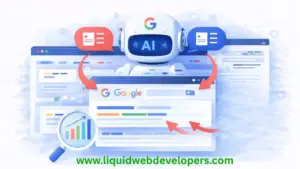
Collections are your most powerful asset in the AI mode era. A well-built Shopify collection page is, in structural terms, what AI Mode is looking for: a curated, semantic grouping of products organized around a specific user need.
Follow this framework for every major collection page:
1. Lead with a decision-focused description.
Do not start your collection description with “Welcome to our yoga mat collection.” Start with “Choosing the right yoga mat depends on your practice style, joint sensitivity, and whether you travel.” This signals to Google that this page helps users decide, which is exactly what AI Mode references.
2. Use natural language FAQ content within your collection.
Add a FAQ section below your product grid that answers the questions your customers are really asking. This is the place where you can use the FAQ schema markup so the AI Mode can find and use the yoga mat information when it makes its summaries. People have a lot of questions about yoga mats. What is the best thickness of a yoga mat for someone who is just starting out with yoga? Which yoga mat material will last the longest? These are the kinds of questions people ask when they talk to the AI Mode about yoga mats. So it is an idea to answer these yoga mat questions here.
3. Implement proper breadcrumb and internal linking.
Google AI Mode uses entity relationships to understand your site structure. A breadcrumb schema and a logical internal link hierarchy help AI mode understand that your collection page is the authoritative hub for its topic. Link from blog posts to relevant collections, and from collections to related collections.
4. Keep collection meta descriptions conversational and specific.
Write meta descriptions that directly answer a likely query. “Find yoga mats tested for grip, cushioning, and travel friendliness, with honest recommendations for every skill level” is more AI-mode-friendly than a generic brand statement.
How to Optimize Shopify Product Pages for AI Mode
Product pages are where the AI Mode shopping panel gets populated. Google pulls product data, review signals, pricing, and availability to assemble its AI-generated product carousels. If your product pages are not providing clean, structured signals, your products simply will not appear.
Critical optimizations for every Shopify product page:
- Product schema markup. Ensure every product page has complete Schema.org product markup, including name, description, brand, image, SKU, price, availability, and aggregate rating. Shopify themes handle some of this natively, but audit your structured data using Google’s Rich Results Test regularly.
- Rich, specific product descriptions. Write product descriptions that answer real purchase questions. Dimensions, materials, compatibility, use cases, and what makes this product different from alternatives. AI Mode’s passage indexing extracts specific sentences from product pages to answer user queries. Give it good sentences to work with.
- Review signals at the product level. AI Mode’s AI overview for product queries often surfaces review sentiment. Make sure your product pages aggregate and display real customer reviews and that the review schema is properly implemented. Stores using Shopify’s native review system should verify schema output with a structured data validator.
- Variant-level clarity. If your product has multiple variants (sizes, colors, materials), ensure each variant’s key attributes are surfaced clearly in the page content, not just in dropdown selectors. AI Mode can struggle to read JavaScript-rendered variant data that is not reflected in the HTML.
- Google Merchant Center feed accuracy. Your Merchant Center product feed must match your Shopify product page data exactly. Pricing mismatches, inaccurate availability, or missing GTIN values will reduce your eligibility to appear in AI Mode’s product listings.
The #1 Shopify Advantage in AI Mode: “Best For” Collections
This is the single most underused tactic available to Shopify store owners today. Creating “Best For” collections is a strategy that directly aligns with how AI Mode assembles its responses.
When someone asks Google AI Mode, “What is the running shoe for beginners?” the AI needs to find a good answer from somewhere. If your store has a section called “Running Shoes for Beginners” and it is set up for that with a description that explains why you picked those shoes and what makes them good for people who are new to running, then you are giving Google AI Mode exactly what it needs to tell people about your store. Google AI Mode can use your store as a source because you have a collection of running shoes for beginners that’s helpful and easy to understand. This way, when people ask Google AI Mode about running shoes for beginners, it can say that your store has a selection of running shoes for beginners.
Here is how to build the best collections that AI mode will reference:
- Name collections after the user’s needs, not just the product category
- Write a collection intro that explicitly explains the selection criteria.
- Include a concise “why we recommend these” paragraph that reads naturally.
- Add an FAQ schema addressing the specific use-case question that the collection answers.
- Cross-link to related Best For collections to build semantic authority.
Examples of best collections that work in AI mode: “Laptops Best for Students,” “Protein Powders Best for Weight Loss,” and “Baby Monitors Best for Large Homes.” Notice how each maps directly to a natural language query someone would type or speak.
Shopify Blog Strategy for AI Mode — What Still Works
Shopify’s built-in blog remains a powerful tool for AI mode visibility, but the type of content that works has shifted. Generic how-to content and thin listicles are being absorbed entirely into AI overviews, giving your store zero credit. Deep, experience-backed content is being cited.
Prioritize these blog content formats:
- Comparison guides written from real experience. “We tested 12 standing desks for 6 months: here is what we learned” has EEAT signals baked in. AI mode favors content that demonstrates genuine expertise and firsthand knowledge.
- Buying guides are structured for decision-making. Organize buying guides around the questions a customer asks before purchasing, not around your product features. Answer “how do I know if I need this” before you answer “here is what we sell.”
- Problem-solution content that links to relevant collections. Every blog post should have a clear internal link pathway to a product collection. AI Mode traces content-to-product relationships, and your blog is a bridge between discovery intent and purchase intent.
Avoid publishing blog content that simply paraphrases product category information without adding real editorial judgment. AI Mode will summarize that content for the user without sending them to your site.
How Shopify Stores Should Be Structured: Internal Linking
Internal linking in the AI Mode era is not about PageRank flow. It is about entity clarity. Google needs to understand that your store is the authoritative hub for a specific set of related product topics, and your internal link structure communicates that relationship.
Build your internal linking around this hierarchy:
- Homepage to top-level category collections. Your homepage should clearly link to your most important collection hubs.
- Category collections are best for sub-collections. “Yoga Mats” links to “Yoga Mats for Beginners,” “Yoga Mats for Hot Yoga,” and “Eco-Friendly Yoga Mats.”
- Blog posts to relevant collections and product pages. Every piece of content should point toward a commercial endpoint.
- Product pages to related products and their parent collection. Shopify’s “You may also like” section, when properly configured, strengthens entity associations.
Avoid orphaned pages. Any collection or product page that is not reachable through natural internal links is invisible to the entity-based understanding that powers AI Mode citations.
What Shopify Stores Should Track Under AI Mode
Your existing SEO dashboard was built for a world of ten blue links. In the AI Mode era, you need new signals to understand how your store is performing.
Track these metrics with priority:
- Google Search Console impression data by query type. Monitor whether your impressions are holding even as clicks decline. Deep impressions with lower CTR may indicate your content is being cited in AI overviews but not driven to clicks, which still builds brand awareness.
- Google Merchant Center performance metrics. Track impressions, clicks, and conversion rates from your product feed. This is your direct visibility signal into the AI Mode shopping panel.
- Branded search volume growth. If AI Mode cites your store or products in responses, you should see a corresponding lift in branded search queries over time. Use Google Trends and Search Console to monitor brand query trends.
- Collection page engagement metrics. Time on page, scroll depth, and add-to-cart rates from collection pages indicate whether your decision-support content is resonating.
- Revenue per session from organic traffic. With fewer clicks but higher-intent visitors, your conversion rate and revenue per organic session should improve if your strategy is working. Track this in Looker Studio or Shopify’s built-in analytics.
Final Take: Shopify SEO in AI Mode Becomes “Collection + Decision SEO.”
The Shopify stores that will thrive through 2026 and beyond are not the ones chasing algorithm updates or scrambling to reverse-engineer what AI mode is doing this week. They are the ones who build stores that are genuinely useful to shoppers at every stage of the decision journey.
AI Mode has not made e-commerce SEO harder. It has made it clearer. The signals that matter are the ones that have always mattered for good retail: real expertise, honest product curation, accurate information, fast and trustworthy shopping experiences, and content that helps people make confident purchase decisions.
Your Shopify store’s structural advantage is the collection system. Use it intentionally. Build the best. For collections around real user needs. Write descriptions that help shoppers decide, not just browse. Implement schema markup that gives AI Mode clean data to work with. Keep your Merchant Center feed accurate and complete.
Think of your Shopify SEO strategy in 2026 as two parallel tracks running simultaneously:
- Track 1—AI Mode Presence: Get cited in AI overviews through authoritative collection content, FAQ schema, and buying guide expertise. Build brand recognition and trust even before users click.
- Track 2 — Purchase Conversion: Capture transactional clicks through flawless product pages, accurate Merchant Center feeds, and frictionless checkout experiences that convert the high-intent visitors who do arrive.
Run both tracks with discipline and consistency, and your Shopify store will not just survive the AI mode transition. It will be positioned as exactly the kind of trusted, expert merchant that Google’s generative AI is designed to surface.
This article reflects hands-on analysis of AI Mode behavior across Shopify merchant categories, structured data audits, and direct observation of Search Console performance shifts during the AI Mode rollout period in 2025-2026.